A borrower buying a company, refinancing expensive debt, or purchasing owner-occupied real estate can have a strong deal and still lose weeks to avoidable file issues. The problem is rarely the idea. It is usually the paperwork, the timing, and whether the file answers an underwriter's questions before credit asks for another round of conditions.
An SBA loan application checklist needs to do more than name the forms. It needs to show why each document matters, what can trigger a lender concern, and how the file changes for acquisitions, working capital requests, and commercial real estate transactions under SBA SOP standards. That is the difference between a package that moves into underwriting and one that keeps bouncing back for clarification.
The SBA SOP sets the baseline. Your lender then adds its own credit policy, industry limits, collateral standards, and closing requirements. In practice, that means borrowers need a file that is complete, internally consistent, and easy to verify. Tax returns should match financial statements. Personal liquidity should match the SBA Form 413. Ownership, affiliates, debt, and use of proceeds should line up across every document.
Start by organizing the package the way a lender reviews it. If your personal financial statement is one of the sticking points, this guide to the SBA personal financial statement Form 413 will help you avoid common errors.
If you are looking at a lender portal, a CPA folder, and a chain of emails from the seller or landlord, you are in the right place. The sections below break the checklist into the ten items that drive approval, explain what lenders are validating in each one, and point out the mistakes that slow SBA deals down. If you want help assembling and standardizing files before submission, it also helps to find the right document automation tool.
Table of Contents
- 1. Personal Financial Statement Form 413
- 2. Business Tax Returns 2–3 Years
- 3. Business Financial Statements Current and Historical
- 4. Business Plan and Executive Summary
- 5. Personal Credit Report and Authorization
- 6. Collateral Documentation and Appraisals
- 7. Business Debt Schedule and Existing Loan Documentation
- 8. Corporate Structure Legal and Compliance Documentation
- 9. Use of Funds Statement and Detailed Loan Disbursement Plan
- 10. Acquisition-Specific Documentation Purchase Agreement Seller Verification and Environmental Clearance
- SBA Loan Application: 10-Item Checklist Comparison
- From Checklist to Closing Your Next Steps
1. Personal Financial Statement Form 413
SBA Form 413 is where the lender stops looking only at the business and starts looking at the people behind it. Every owner with at least a 20% stake has to provide a personal financial statement, and lenders use it to assess liquidity, contingent obligations, and overall financial stability. It isn't a throwaway form. It's one of the first places underwriters catch inconsistencies.

The form has to reflect real, supportable numbers. If an owner lists cash, marketable securities, real estate equity, or notes payable, the lender may ask for statements, mortgage balances, or account screenshots to support those entries. Owners often get into trouble when they estimate values casually, leave off smaller liabilities, or mix personal and business assets in the same line item.
What lenders are checking
A lender wants to know whether the guarantor is financially transparent and whether the file holds together under scrutiny. SBA rules also require an unconditional personal guaranty from any owner with 20% or more equity, which makes this more than a disclosure exercise. It's a legal commitment tied directly to the credit decision, as outlined in Lendio's summary of SBA loan requirements.
Practical rule: Complete Form 413 with your statements open in front of you. Memory creates errors, and errors create conditions.
A common real-world example is a two-partner LLC where each owner holds 50%. If one partner has substantial retirement assets but also a personal line of credit secured by a residence, both pieces need to appear accurately. If they don't, the lender may question whether other disclosures are incomplete too.
What works in practice
- Use hard backup: Pull current bank, brokerage, mortgage, and loan statements before you start.
- Separate ownership clearly: Don't list business-owned equipment or business cash as personal assets.
- Update when facts change: If you sell a property or take on a new personal debt during underwriting, revise the form.
- Stay consistent: Your addresses, entity names, and ownership percentages should match the rest of the file.
If you need a line-by-line walkthrough, this guide on filling out your SBA personal financial statement is a useful companion.
2. Business Tax Returns 2–3 Years
A borrower says the company is growing, margins are stable, and cash flow will support the new payment. Then the tax returns show falling net income, large shareholder distributions, or add-backs that do not hold up. That is the point where a promising SBA file turns into a conditioned file.
Business tax returns give the lender a tested version of the story. They show how the business reports income to the IRS, how expenses are categorized, and whether the earnings pattern supports repayment under SBA underwriting standards. For an operating business, lenders usually expect at least a track record they can analyze over multiple years. For an acquisition, the returns often carry even more weight because the buyer is asking the lender to rely on the target company's historical performance.
The file needs complete signed federal returns, not excerpts. That includes every schedule, statement, and attachment, plus K-1s for pass-through entities. If pages are missing, underwriting usually stops and asks for a clean copy. If the numbers on the return do not line up with the debt schedule, financial statements, or owner income shown elsewhere in the file, the lender starts questioning reliability.
The review goes deeper than revenue. Underwriters look at ordinary business income, depreciation, officer compensation, interest expense, and distributions. They are trying to determine recurring cash flow and whether it supports SBA repayment standards, including the debt service test explained in this guide to how DSCR affects SBA loan approval.
A few loan-purpose differences matter here:
- Acquisitions: Seller returns are often the baseline for valuing cash flow. If the seller has aggressive discretionary expenses or inconsistent reporting, expect more questions and tighter add-back scrutiny.
- Working capital loans: Lenders focus on whether recent tax returns match the operating story. A dip in taxable income may be acceptable, but only if current results and a clear explanation support the request.
- Commercial real estate loans: Returns help show whether the operating company can carry occupancy costs, mortgage payments, and any existing business debt without strain.
A common miss is failing to explain a bad year before the lender asks. A contractor might show strong gross receipts but weaker taxable income because of equipment purchases, subcontractor spikes, or a temporary margin squeeze on one large job. That file can still work. The borrower just needs a short, credible explanation tied to the return and supported by the current numbers.
Missing schedules, unexplained swings, and unsigned returns do not kill every deal. They do slow underwriting and invite more conditions.
How to submit tax returns without creating extra work
- Pull IRS transcripts early: They help confirm the filed return matches what the lender received.
- Send full returns: Include all schedules, attachments, and K-1s. Do not send partial PDFs.
- Address year-over-year changes in writing: A brief memo on revenue drops, margin compression, or unusual deductions saves time.
- Match the rest of the file: Entity name, ownership, and income figures should align with your debt schedule and financial statements.
- Get seller tax returns early in acquisition deals: Waiting for them late in underwriting regularly delays closing.
If your returns are on extension, say so up front and provide interim financials that bridge the gap. Borrowers that need help organizing that package should review how to ready business financials. It cuts down on avoidable back-and-forth and gives the lender a cleaner basis for credit approval.
3. Business Financial Statements Current and Historical
A borrower submits strong tax returns, then underwriting asks for year-to-date financials and the deal suddenly slows down. That usually happens because the returns show what the business earned before, while the lender still needs to see what the company looks like now.
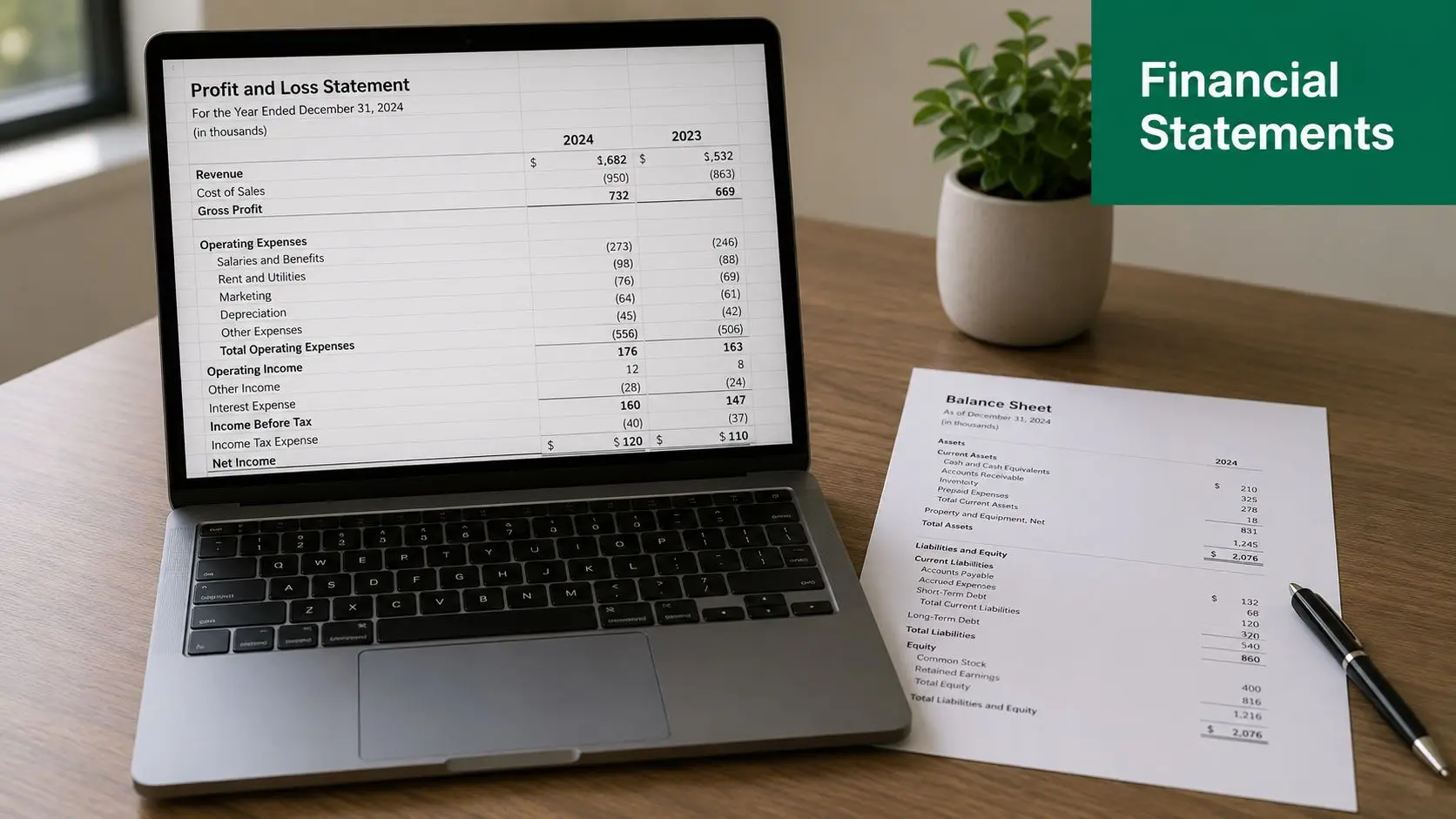
For this part of the SBA file, lenders usually want a current Profit and Loss statement, a current balance sheet, and year-to-date monthly reporting that ties back to the tax returns already submitted. The exact aging standard can vary by lender and loan type. For example, CCB Community Bank's SBA checklist says the Profit and Loss statement must be current within 90 days of the application date. The practical takeaway is simple. Do not submit stale statements and assume underwriting will work around them.
What a lender is really reviewing
Lenders are testing reliability first, then cash flow.
They compare internal statements to filed returns, check whether receivables, payables, and inventory make sense for the industry, and look for margin erosion that could weaken repayment. They also review whether the balance sheet shows enough liquidity to handle payroll, vendor timing, and routine swings in the business. If the books do not reconcile cleanly, the question becomes whether the issue is timing, accounting method, or weak bookkeeping.
That matters more in SBA lending than many borrowers expect because the credit memo has to support repayment under SBA SOP-driven underwriting standards, not just tell a good story. For an acquisition, the lender wants clean historicals from the target plus current interim numbers that support the earnings being purchased. For working capital, the lender wants to see where cash pressure exists today and whether the request solves it. For owner-occupied commercial real estate, the operating company's statements need to support both occupancy and debt service.
What improves the file
- Send monthly financials, not just one year-to-date snapshot: Monthly detail helps the lender see seasonality, customer concentration shifts, and whether a weak quarter was isolated or part of a trend.
- Tie the books to the tax returns: If book income and taxable income differ, explain whether the gap comes from depreciation, owner add-backs, cash versus accrual accounting, or another clear reason.
- Flag one-time adjustments in writing: A short schedule for unusual legal fees, temporary payroll spikes, storm damage, or startup costs saves time in underwriting.
- Match the debt schedule and bank statements: Existing loan payments, credit lines, and seller notes should show up consistently across the file.
- Use realistic projections: In acquisition and expansion requests, assumptions should connect to actual staffing, pricing, occupancy, backlog, or signed contracts.
I see the most friction when borrowers hand over bookkeeping exports with no context. A lender can work with imperfect numbers. A lender has a harder time with numbers that change from document to document.
If you need a better handle on the cash flow test underwriters focus on, review this guide to DSCR and SBA loan approval. Borrowers who need help cleaning up interim statements should also review how to ready business financials.
4. Business Plan and Executive Summary
A business plan matters most when the lender can't rely on a simple historical story. That includes acquisitions, businesses with uneven recent performance, and working capital requests tied to a forward-looking use of funds. In those cases, the plan isn't marketing material. It's your operating thesis on paper.
The strongest plans do three things well. They explain what the business does, why management can execute, and how the projections connect to real operating assumptions. If a borrower submits a slick narrative with unsupported growth, lenders tend to discount it immediately.
What belongs in a credible plan
A useful executive summary is brief and specific. It should identify the business model, customer base, management background, financing request, and the exact use of proceeds. The longer plan can then support that summary with competitive context, staffing, operations, and financial projections.
For a search fund acquisition, the lender usually wants to know why this buyer can step into this company and preserve cash flow. For a working capital request, the lender wants to know where the cash goes and what the business expects to achieve with it. For owner-occupied commercial real estate, the lender wants confidence that the operating business can support both occupancy and debt payments.
A lender will forgive a simple business plan faster than an inflated one.
Practical advice for stronger submissions
- Tie projections to operating drivers: Headcount, contract pipeline, booked backlog, rent savings, and capacity increases are easier to underwrite than vague growth claims.
- Address concentration directly: If one customer or vendor matters heavily, say so and explain the mitigation.
- Show management depth: Lenders back operators, not just ideas.
- Explain the transition in acquisitions: Spell out what changes on day one and what stays the same.
A good plan sounds like someone who runs a business, not someone who writes pitch decks. That difference shows up immediately in underwriting.
5. Personal Credit Report and Authorization
Personal credit still carries real weight in SBA lending, especially for guarantors. Even when the business has strong performance, lenders review the credit habits of each owner who crosses the ownership threshold because repayment discipline at the personal level often signals how a borrower manages obligations under stress.
Borrowers also need to be eligible and creditworthy under SBA standards. In practice, lenders examine repayment patterns, public records, utilization, and whether credit issues are isolated or part of a broader pattern. They aren't looking for a perfect report in every case. They are looking for a report they can defend in committee.
What to do before the lender pulls credit
Get ahead of the report. Pull your own file before applying, review every trade line, and dispute errors early. If there are recent late payments, collections, or a bankruptcy event in the background, prepare a concise written explanation with dates and context.
That's particularly important because lenders review several pillars at once, including credit profile and ownership review. If one pillar breaks, the file can fail even when other parts look solid. The cleanest applications are the ones where all owners know their credit will be reviewed and no one is surprised by what appears.
Smart prep for borderline credit files
- Reduce avoidable balances: Revolving debt that can be paid down before application often helps the file present better.
- Write the explanation memo early: Don't wait for underwriting to ask why something happened.
- Coordinate among all guarantors: One weak report can affect the whole transaction.
- Sign authorizations promptly: Delays at this stage send the wrong signal.
A recent late pay tied to a documented medical event is usually easier to explain than a pattern of missed obligations with no narrative. Underwriters care about the pattern, the recency, and whether the rest of the file supports confidence.
6. Collateral Documentation and Appraisals
A borrower reaches credit approval, then the file stalls because the lender cannot verify who owns the equipment, whether a lien is already attached, or whether property value will hold up under appraisal. That is how collateral issues show up in practice. They rarely kill a strong deal by themselves, but they often delay closing and force a last-minute restructure.
For SBA loans, collateral is part of the lender's risk analysis, not a substitute for repayment ability. A clean collateral package helps the lender answer three questions quickly. What assets are available, what is their supportable value, and can the lender lien them under SBA rules and standard closing requirements. Smaller 7(a) requests may have limited collateral support, while larger requests and real-estate-backed structures usually involve much more documentation. The practical point for borrowers is simple. Do not guess what the lender can use. Prove it.
What lenders usually need, and why
The document list changes by loan purpose.
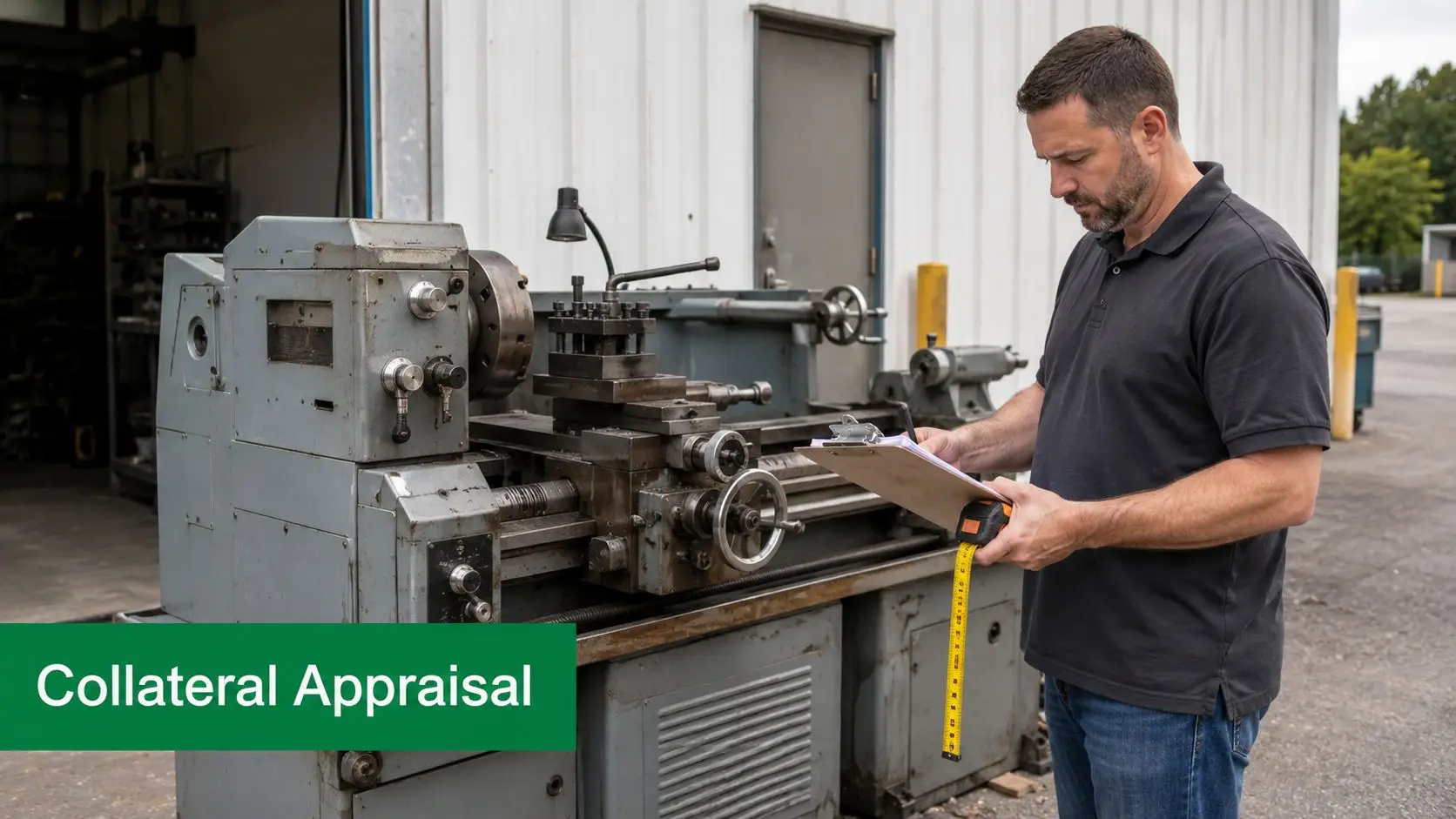
For equipment, expect an equipment schedule with description, serial number, model, year, condition, and estimated value. Lenders ask for this because generic entries like "shop equipment" or "manufacturing line" are not lienable in any useful way. If the file goes to closing and counsel cannot match the collateral description to a UCC filing, the lender has a problem.
For owner-occupied commercial real estate, expect appraisal, title work, insurance, survey in some cases, and environmental reports when the property type or history calls for them. SBA SOP standards put a lot of weight on environmental risk. Borrowers often focus on value and forget that a gas station, dry cleaner, auto use, or certain industrial occupancy can create a separate approval track even when the purchase price looks reasonable.
For acquisitions, collateral review overlaps with valuation and lien payoff work. The lender needs to know which assets are transferring, whether the seller's liens will be released, and whether the post-closing collateral package matches the purchase agreement. I see this break down most often when inventory, vehicles, or titled equipment are listed loosely in the LOI but not tied cleanly to the closing documents.
Where collateral packages usually break
The first problem is unsupported value. A borrower may assign a high number to used equipment or commercial property based on replacement cost, old tax depreciation schedules, or a broker opinion that underwriting cannot use.
The second is ownership. If the business uses an asset but a related entity or owner holds title, the lender cannot assume it belongs in the collateral pool. That has to be documented and structured correctly.
The third is existing liens. UCC searches and title reports surface problems fast. If your file says an asset is free and clear and the search shows a prior lender, underwriting stops until the payoff and release path is clear.
How to keep this item from slowing the deal
- Build the collateral list early: Include asset descriptions, locations, serial numbers, and who holds title.
- Match values to evidence: Use appraisals, invoices, fixed asset schedules, or other support the lender can defend in credit and closing.
- Flag lien issues up front: Existing UCC filings, equipment loans, tax liens, and real estate mortgages are easier to handle before committee approval than after.
- Expect purpose-specific reports: CRE loans may need appraisal and environmental work. Acquisitions often need tighter payoff and transfer documentation. Working capital loans still need a clear picture of available collateral, even when cash flow drives the approval.
- Treat condition as underwritten information: Deferred maintenance, obsolete equipment, and partial operability affect advance rates and lender comfort.
A strong collateral package does two things. It reduces avoidable questions from underwriting, and it gives closing counsel what they need to document liens without rewriting the transaction at the end.
Here's a useful explainer for borrowers who want a visual overview of the collateral side of the process.
7. Business Debt Schedule and Existing Loan Documentation
A borrower asks for working capital, and the cash flow looks fine until underwriting matches the tax returns, bank statements, and credit report against the debt schedule. A forgotten equipment lease appears. A merchant cash advance shows daily withdrawals. The line of credit balance is higher than what was listed. That is when a file slows down.
The debt schedule is not just a list of obligations. It is how the lender tests whether the business can carry the new SBA payment, whether the stated use of proceeds is accurate, and whether any existing lender has lien rights that affect the new loan. If this schedule is incomplete or stale, the rest of the analysis becomes less reliable.
For SBA files, I treat the debt schedule as a reconciliation document. It should line up with the balance sheet, recent loan statements, credit pulls, and any payoff letters. If those items conflict, the lender has to determine which number is current and whether the difference changes debt service coverage, lien position, or eligibility for a refinance.
Where files usually get stuck
Borrowers often list bank term loans and miss the obligations that underwriters still count. Common omissions include equipment leases, shareholder loans, seller notes, merchant cash advances, business credit cards carried month to month, and short-term online loans. Each one affects global cash flow or lien analysis.
Stale balances create a second problem. If the debt schedule says a term loan has a small balance left but the payoff statement shows a much larger number, the lender cannot finish the credit memo cleanly. The same issue comes up when the schedule shows debt as long-term, while statements show past-due payments, renewals, or maturity dates that already passed.
Purpose matters here.
For a working capital loan, the lender wants to know whether existing debt is already squeezing monthly cash flow. For an acquisition, the lender has to separate target-company debt from buyer debt and confirm what gets paid off at closing versus what stays in place. For owner-occupied commercial real estate, existing mortgages, equipment liens, and blanket UCC filings can affect how the new loan is secured and documented.
A clean debt schedule helps the lender answer three questions quickly: what must be paid, what can stay, and what could interfere with repayment or collateral.
What to include so underwriting does not have to rebuild it
- Creditor name and loan type: Identify whether it is a term loan, LOC, lease, note, MCA, mortgage, or shareholder debt.
- Current balance: Use recent statements or direct lender confirmations, not last quarter's internal numbers.
- Monthly payment and maturity date: Underwriters use both to test repayment capacity and spot short-fuse renewals.
- Collateral pledged: Note specific equipment, vehicles, real estate, A/R, inventory, or blanket liens.
- Account status: Flag any late payments, modifications, deferments, or forbearance periods.
- Supporting documents: Include statements, note agreements, payoff letters, and refinance details when applicable.
One practical point from the lender side. If you are asking to refinance debt with SBA proceeds, label that debt clearly and provide the documents that show original purpose, current terms, and payoff amount. If you do not, the lender has to spend time determining whether the refinance fits SBA rules or whether it creates a use-of-proceeds problem.
Done well, this section gives the credit team a usable map of the company's obligations instead of a list they have to debug. That saves time in underwriting and reduces surprises at closing.
8. Corporate Structure Legal and Compliance Documentation
This is the section borrowers underestimate because it feels administrative. It isn't. Corporate records determine who owns the borrower, who has authority to sign, who must guarantee, and whether the legal structure lines up with the loan request.
Lenders review entity formation documents, operating agreements or bylaws, ownership ledgers or cap tables, certificates of good standing, key licenses, and borrowing resolutions. If ownership percentages conflict across documents, the file becomes harder immediately. If the borrower has gone through partner changes without updating formal records, that problem usually surfaces here.
Why this matters in underwriting
SBA lenders verify business and industry eligibility, ownership and character, financial capacity, collateral, and use of proceeds before approval. Legal structure sits right underneath those tests because it determines who the actual borrower is and whether the borrower can legally execute the deal.
An example: an LLC with two equal members wants an SBA 7(a) loan for expansion. The operating agreement still lists an old member who exited years ago, while tax returns show the current two owners. Until counsel or the borrower updates the governing documents and confirms authority, the lender can't cleanly document the closing.
The best way to package legal documents
- Confirm current ownership first: Make sure formation docs, operating agreement, and tax records tell the same story.
- Get a certificate of good standing: It's a simple document that prevents needless last-minute conditions.
- Prepare resolutions early: Don't wait for closing counsel to discover missing authority.
- Check licenses and permits: Expired licensing can create avoidable eligibility concerns.
This is one of those parts of the SBA loan application checklist that rarely wins approval by itself, but it can definitely delay approval if it's sloppy.
9. Use of Funds Statement and Detailed Loan Disbursement Plan
A lender needs to know exactly where the money is going. “Working capital” by itself is often too vague. “Business acquisition” is only the starting point. The use of funds statement should break the loan into categories the lender can test against SBA eligibility and transaction documents.
That's especially important because lenders evaluate use of proceeds as one of the core approval pillars. A loan request that's broad, shifting, or poorly supported invites more scrutiny than one tied to invoices, purchase agreements, refinance balances, or a defined post-close reserve.
How this changes by loan type
For working capital, lenders want specificity. Payroll, inventory buildup, marketing, seasonal receivables support, contract mobilization, and operating cushion are all clearer than a lump-sum request. For commercial real estate, the statement should align with the purchase contract, improvement budget, and closing costs. For refinancing, payoff letters and current loan statements should support every amount.
Acquisition files need even more detail. The purchase price, seller note treatment, fees, working capital at close, and any holdback or post-close reserve should reconcile to the purchase agreement and the lender's sources-and-uses schedule.
What improves lender confidence
- Support line items with documents: Quotes, estimates, invoices, and payoff letters help.
- Avoid vague buckets: The more specific the category, the easier it is to underwrite.
- Reconcile to the transaction documents: Numbers should match across the file.
- Flag changes immediately: If the intended use shifts during underwriting, tell the lender before they discover it in another document.
A clear disbursement plan also helps at closing. It reduces confusion over what gets funded directly to vendors, what gets wired at settlement, and what remains available after closing.
10. Acquisition-Specific Documentation Purchase Agreement Seller Verification and Environmental Clearance
A buyer can have strong credit, solid liquidity, and relevant industry experience and still lose time on an SBA acquisition because the deal file does not hold together. In acquisition lending, lenders test three things at once: the buyer, the business, and the transaction structure. If any one of those is weak or inconsistent, underwriting slows down.
For SBA 7(a) business acquisitions, the document list usually goes beyond the core application package. Expect requests for the signed purchase agreement, seller financial statements and tax returns, a business valuation when required under SBA rules, aging reports, and support for any working capital included at closing. The reason is simple. The lender has to confirm that the price, cash flow, and structure fit SBA SOP requirements and produce a loan the bank can defend in credit and later in guaranty review.
Where acquisition files usually get stuck
Equity injection is a common trouble spot. Borrowers often know the required cash contribution amount, but they do not document the source early enough. Clarify Capital notes that lenders typically expect a tangible 10% equity injection before underwriting and that they found 42% of 2024 to 2025 SBA 7(a) applications were delayed or rejected due to insufficient or unverified equity sources, according to their review of SBA loan requirements. In practice, I see delays when the cash came from a recent gift, a securities account transfer, a home equity draw, or a partial rollover that is still in motion and not papered cleanly.
Seller notes create another pressure point. If the file relies on a seller note to satisfy part of the injection or support debt service, the standby terms have to match SBA rules exactly. A note that allows principal payments too early, includes side terms outside the purchase agreement, or conflicts with the lender's sources-and-uses schedule can force a rewrite late in the process.
What to gather early, and why lenders ask for it
- Executed purchase agreement: Underwriters use it to confirm price, assets included, seller note terms, training period, non-compete language, and whether inventory or working capital is handled inside or outside the sale.
- Seller verification package: This usually includes business tax returns, interim financials, and receivables and payables aging. Lenders use it to test earnings quality and to see whether the business is carrying stale receivables, stretched payables, or customer concentration risk.
- Equity source documentation: Two months of bank or brokerage statements, gift letters where applicable, and a paper trail for any recently transferred funds help clear this issue before commitment.
- Environmental reports for deals involving real estate or higher-risk use: Gas stations, auto repair, dry cleaning, manufacturing, and businesses with chemical storage often trigger at least a records review and sometimes a Phase I.
- Support for add-backs: If the debt service coverage depends on owner perks, one-time expenses, or payroll adjustments, the lender will want tax return support, general ledger detail, or third-party backup.
The trade-off is speed versus certainty. Borrowers sometimes push to submit with an LOI and limited seller data to get early feedback. That can work for a screening call. It rarely works for full underwriting. A signed agreement and a clean seller package usually save more time than they cost.
Loan purpose changes what matters most. In an acquisition with working capital, lenders will compare the post-close cash need to the purchase agreement and the first-month operating plan. In an acquisition with owner-occupied real estate, environmental clearance and property-level due diligence can become the pacing item. If you are buying an existing company, this guide on using an SBA loan to buy a business lays out the full process in more detail.
One final point. Sellers often cause the delay without meaning to. Missing tax returns, unsigned interim statements, loose explanations for customer deposits, or verbal claims about add-backs with no backup all create lender questions. The best acquisition files are the ones where buyer, seller, CPA, and lender reconcile the numbers early, before the credit memo is written.
SBA Loan Application: 10-Item Checklist Comparison
| Item | Implementation Complexity 🔄 | Resource Requirements ⚡ | Expected Outcomes 📊 | Ideal Use Cases 💡 | Key Advantages ⭐ |
|---|---|---|---|---|---|
| Personal Financial Statement (Form 413) | Medium, detailed owner disclosures; must be signed and updated | Moderate, bank, investment, property statements; owner time | Lender visibility into personal net worth, repayment capacity, and guarantees | Required for SBA 7(a)/504 and loans with owners ≥20% | Demonstrates commitment, reveals collateral sources, assesses personal creditworthiness |
| Business Tax Returns (2–3 Years) | Low–Medium, collect and verify filed returns and transcripts | Low, filed returns, K-1s, IRS transcripts; minimal cost | Verifiable income history and profitability trends for underwriting | Established businesses and acquisitions | Official, IRS-verifiable income documentation supporting cash-flow analysis |
| Business Financial Statements (Current and Historical) | Medium, prepare monthly P&Ls, balance sheets, and pro formas | Moderate, internal accounting, possible CPA review; time-intensive | Current cash-flow visibility, DSCR analysis, and trend identification | Working capital requests, acquisitions, operational assessments | Shows recent performance, supports adjusted EBITDA and debt coverage metrics |
| Business Plan and Executive Summary | High, market analysis, strategy, and multi-year projections | High, research, financial modeling, advisor or consultant input | Lender confidence in management, strategy, and projected results | Growth financing, first-time borrowers, acquisitions | Demonstrates strategic planning and differentiates applications |
| Personal Credit Report and Authorization | Low, authorize pulls and review reports | Low, credit pull fees negligible; time to correct errors | Clear view of payment history, scores, public records affecting eligibility | All SBA loans; required for guarantors | Identifies credit issues early and enables remediation before underwriting |
| Collateral Documentation and Appraisals | Medium–High, appraisals, title and lien searches, possible environmental checks | High, appraisal fees, title searches, specialized reports and time | Objective valuation of collateral, supports LTVs and loan terms | Asset-backed loans, 504 real estate, equipment financing | Reduces lender risk with independent valuations; can improve loan terms |
| Business Debt Schedule and Existing Loan Documentation | Low–Medium, compile schedules, promissory notes, and payment histories | Low–Moderate, creditor statements and payoff quotes | Accurate total debt service and lien position for underwriting | Refinancing, consolidation, loans with existing obligations | Clarifies obligations, identifies refinancing or subordination needs |
| Corporate Structure, Legal and Compliance Documentation | High, articles, resolutions, ownership verification, UCC results | High, counsel, state filings, searches, notarizations | Confirms authority to borrow, ownership percentages, and legal clearances | Any loan with complex ownership or recent changes; acquisitions | Prevents authorization disputes and verifies compliance and lien status |
| Use of Funds Statement and Detailed Disbursement Plan | Medium, itemize uses, align with SBA-permissible categories | Moderate, vendor quotes, cost breakdowns, schedule preparation | Ensures proceeds used appropriately and clarifies disbursement timing | Equipment purchases, working capital, acquisitions | Controls fund deployment, reduces compliance risk, aligns expectations |
| Acquisition-Specific Documentation (Purchase Agreement, Seller Verification, Environmental) | High, executed purchase agreement, environmental and seller financials | High, seller cooperation, Phase 1/2 assessments, title and counsel fees | Validates valuation, uncovers liabilities, supports pro formas for deal | Business acquisitions, asset purchases | Mitigates acquisition risks, validates price and seller representations |
From Checklist to Closing Your Next Steps
A borrower sends what looks like a complete SBA file on Friday. By Tuesday, underwriting has already kicked it back for three common reasons. Ownership percentages do not match the operating agreement, interim financials do not tie to the tax returns, and the use of proceeds is too vague to test against SBA eligibility and closing conditions. That is how a file loses time.
A good checklist earns its keep after submission. It helps the lender answer the core questions behind the documents: Can management repay the debt, does the structure fit SBA SOP rules, are there legal or collateral issues that will delay closing, and is the stated loan purpose fully supported? Borrowers who understand that lens usually submit cleaner files and get fewer avoidable conditions.
Build the package for the people who will touch it. Underwriting wants consistency. Closing counsel wants authority, clean entity records, and a structure that can be documented. For collateral-dependent loans, appraisers and environmental vendors need usable property and business information early. In acquisitions, the lender will also test whether the purchase price, seller note terms, and transition plan hold up under scrutiny, not just whether the deal sounds reasonable in a summary.
Timing depends on the loan type, third-party reports, seller responsiveness, and how complete the file is at the start. As noted earlier, SBA 7(a) transactions often take a few months from application to closing. Working capital loans can move faster when the file is clean and there are no appraisal or environmental requirements. Business acquisitions and owner-occupied commercial real estate loans usually take longer because they involve more third-party diligence, more legal review, and more ways for small inconsistencies to slow the process.
Lender fit matters just as much as document quality. Some SBA lenders are efficient with partner buyouts and straightforward working capital requests. Others are better in change-of-ownership transactions with seller standby debt, partial buy-ins, or commercial real estate tied to an operating company. A specialized broker can materially improve execution at this stage by matching the request to a lender that already likes the structure, then packaging the file in a way that answers that lender's predictable credit questions up front.
That matters in negotiation too.
Two lenders can look at the same SBA-eligible deal and reach different conclusions on collateral shortfalls, post-closing liquidity, guarantor strength, or how much support they want for projections. A clean package gives you options because the lender is reviewing credit risk instead of chasing basic paperwork. That is especially true in acquisitions, where weak seller financial support or an unclear add-back schedule can shift a file from near-approval to a long list of conditions.
Borrowers who want fewer surprises should also tighten their document control before submission. Tools for AI document review solutions can help catch mismatched dates, inconsistent entity names, and missing exhibits before those issues turn into underwriting delays, especially in larger acquisition and real estate files.
If you are close to applying, stop collecting documents without a plan. Organize them into a lender-ready file, tie every major number to support, and address obvious weak spots before the first underwriter sees the package. That is how files get from checklist to committee, term sheet, and closing with fewer delays.
GoSBA Loans helps borrowers turn a messy document stack into a lender-ready SBA package. If you're buying a business, funding working capital, or financing owner-occupied commercial real estate, GoSBA Loans can help you match with the right SBA lender, structure the request properly, and move from application to closing with fewer surprises.
