Pari passu means “with equal step”, and in SBA deal stacks it means lenders share the same priority rank and recover pro rata from the same collateral pool. In plain English, nobody gets to jump the line unless the loan documents say so.
If you're trying to close a business acquisition and the stack includes an SBA 7(a), a seller note, maybe an investor check, and sometimes a 504 piece, this phrase shows up at the exact moment the deal either stays clean or gets messy. The legal Latin sounds abstract, but the practical question is simple, who gets paid first if things go wrong, and who shares the pain if the collateral isn't enough? In debt markets, the Bank for International Settlements explains that pari passu clauses are used to signal equal seniority, not a special repayment timetable, and historical research ties the concept to 19th-century proportional treatment in secured debt. BIS research on pari passu clauses
Table of Contents
- Pari Passu in Plain English for SBA Deals
- Rank, Priority, and Pro Rata Explained
- How Pari Passu Works Inside SBA Capital Stacks
- Two Real SBA Deal Stacks Side by Side
- Sample Pari Passu Clause Language and How to Read It
- What Pari Passu Means for Borrowers and Lenders
- Common Misconceptions That Cost SBA Buyers Money
- Pari Passu FAQ for SBA Borrowers
Pari Passu in Plain English for SBA Deals
You're at the term sheet stage, and the buyer side wants to fold a seller note, an investor contribution, and an SBA loan into one acquisition. The question is whether those pieces sit in a neat stack, or whether some of them stand side by side with the same legal standing.
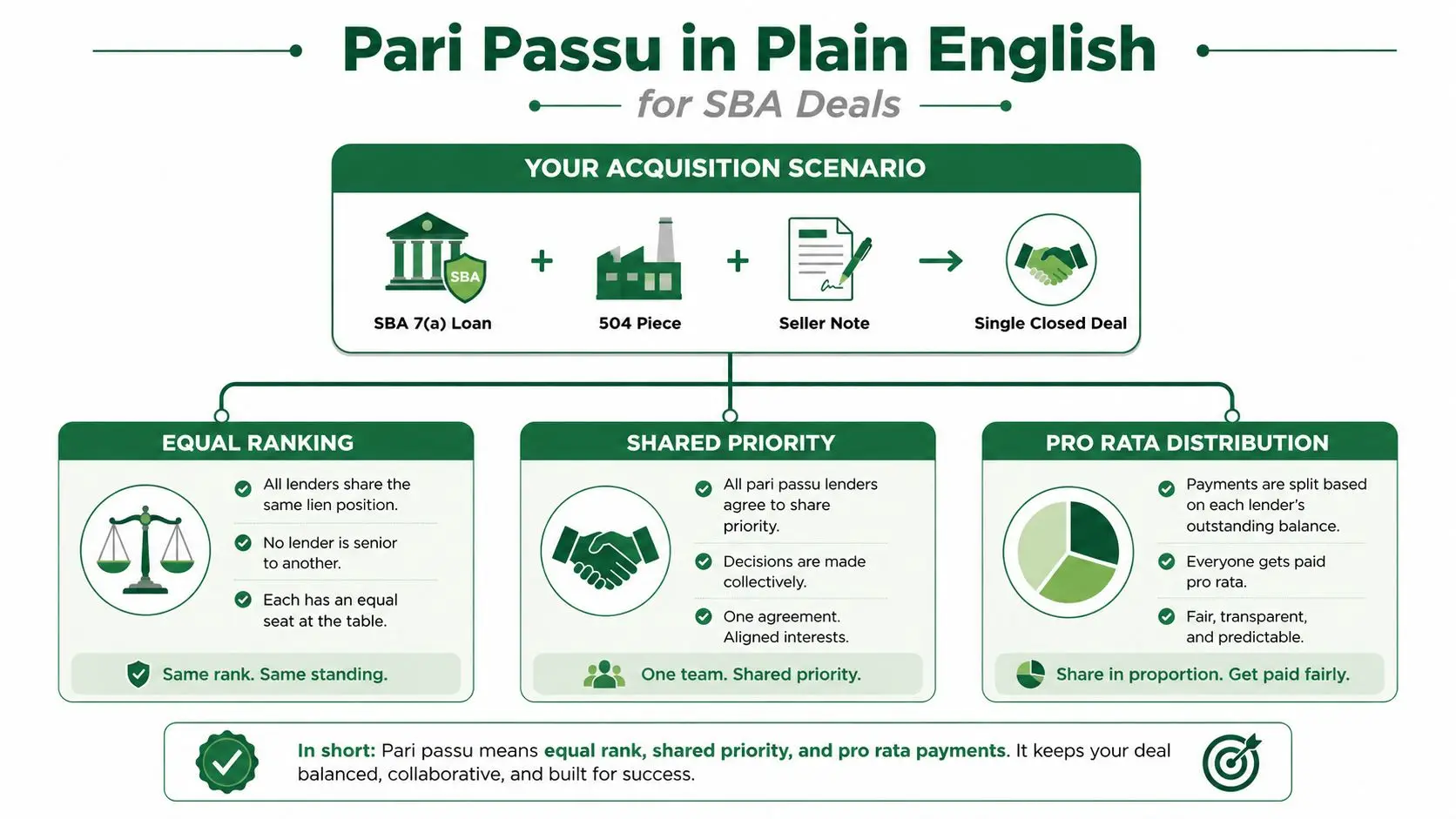
In that setting, pari passu means the equal-rank line is drawn across the claims that are meant to share the same footing. If two creditors are pari passu, they don't have a senior-junior relationship on the collateral they share, they split recoveries according to their share of the claim instead of by a fixed waterfall. That's the practical meaning reflected in lending and insolvency references, where pari passu treatment means equal rank and pro rata recovery rather than preference. Wall Street Prep's pari passu overview
The cleanest way to picture it
Think of one collateral pool, not separate buckets. If the SBA lender and another creditor sit pari passu, both are standing at the same counter when proceeds are distributed.
That's different from a senior debt piece with a second-position note behind it. It's also different from a seller note on standby, where the seller has agreed to step back and let the senior lender get paid first under the document package.
Practical rule: if the documents don't say the claims rank equally, don't assume equal treatment just because the parties closed the deal together.
For a plain-English bridge to the deal structure side, this pari passu loan guide is useful because it talks through equal-ranking financing in acquisition stacks without turning the concept into pure bond-market jargon.
Rank, Priority, and Pro Rata Explained
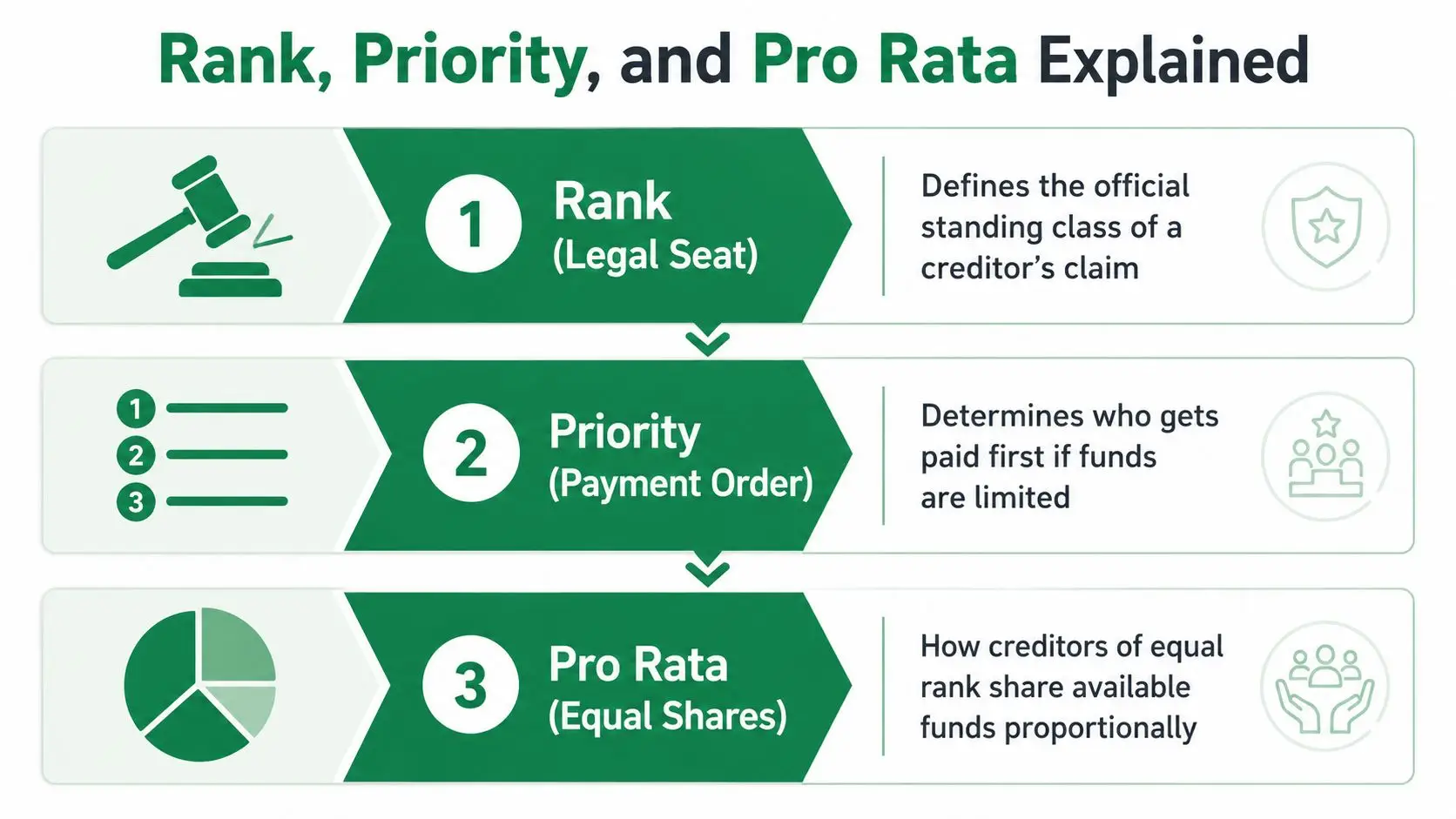
Rank is the legal slot a claim occupies. It shows whether the claim sits with the senior group, the junior group, or another class entirely. In sovereign-bond documentation, pari passu language is used to say the bonds rank equally with one another and with other unsecured payment obligations of the issuer, so the rank label carries real weight in those clauses.
Priority is the payment order. If money is short, the creditor with priority gets paid first, and the creditor without it waits behind. That is the part buyers feel most clearly in a default, because priority decides who reaches collateral proceeds first.
Pro rata is the split method. Once creditors are in the same rank, the available cash is divided according to relative claim size or economic exposure, not by who pushed hardest in negotiations at closing. In equity and co-investment structures, pari passu can be drafted as a proportional waterfall, which is why payout mechanics change when equal-rank holders share sale proceeds based on invested percentage. Carta on pari passu liquidation preferences
Why the distinction matters in a real collateral pool
In an SBA deal, a blanket lien on business assets makes these distinctions practical instead of theoretical. If two creditors share the same collateral pool and the same rank, they share recoveries dollar for dollar on the portion they are meant to share.
The seating analogy helps here. Rank works like the section assignment, priority decides which section gets called first, and pro rata decides how the tickets are split when the section is full. That is why a clause can look harmless in a term sheet and still change the recovery story later.
For a related plain-English glossary resource on how deal terms can read differently depending on context, Benely's health insurance terms guide shows the same drafting problem in another industry, where a phrase can look simple on its face but behave differently once the contract is tested.
How Pari Passu Works Inside SBA Capital Stacks
In SBA financing, the legal center of gravity comes from the loan documents and the SBA program rules, not from generic finance vocabulary. A standby seller note usually sits below the senior lender because SBA structures require that seller debt on standby not compete with the guaranteed loan the way a true pari passu creditor would.
Where the SBA rules end and private drafting begins
That's the key split. The SBA side controls how the borrower's capital injection is treated, how much seller financing can count, and what subordination language the lender needs. The private side controls how non-SBA creditors allocate rights among themselves, so an investor note can be drafted pari passu with another private piece if the intercreditor package is built carefully.
A 504 stack adds another layer, because the 504 component is its own tranche inside the acquisition structure. GoSBA's 504 loan guide is helpful for seeing how that second piece sits beside, rather than inside, a conventional first-lien narrative.
The practical SBA takeaway
A seller note on full standby is not the same thing as a pari passu lender. Standby means the seller has stepped back from current repayment pressure, which is structurally different from equal-rank sharing.
Investor debt can sit alongside an SBA 7(a) piece, but only if the collateral assignment, enforcement rights, and repayment language don't re-create seniority. In real closings, that usually means the lender's counsel wants clean subordination language for anything that must yield, while the buyer's counsel pushes to preserve equal treatment among the non-SBA pieces that are meant to share risk.
Practical rule: if the SBA lender is protected by a standby agreement, don't assume the other capital providers can also claim pari passu status just because everyone funded the same deal.
The SBA SOP-driven reality is simple. The program governs the minimum structure, and the contract governs the rest. That's why the same acquisition can contain one senior SBA loan, one subordinated seller note, and one private investor piece that is either pari passu or not depending on how the intercreditor agreement was written.
Two Real SBA Deal Stacks Side by Side
In the first stack, a buyer uses an SBA 7(a) loan, a 504 piece, and a seller note that sits on standby. The buyer's lawyer gets the seller to agree that the note won't crowd the senior lender, so the SBA debt keeps first-position economics while the seller waits in the background for whatever the documents allow.
That structure is common because it keeps the senior path clean. The seller note still has value, but it doesn't fight the SBA lender for the same collateral rights in a way that would complicate closing.
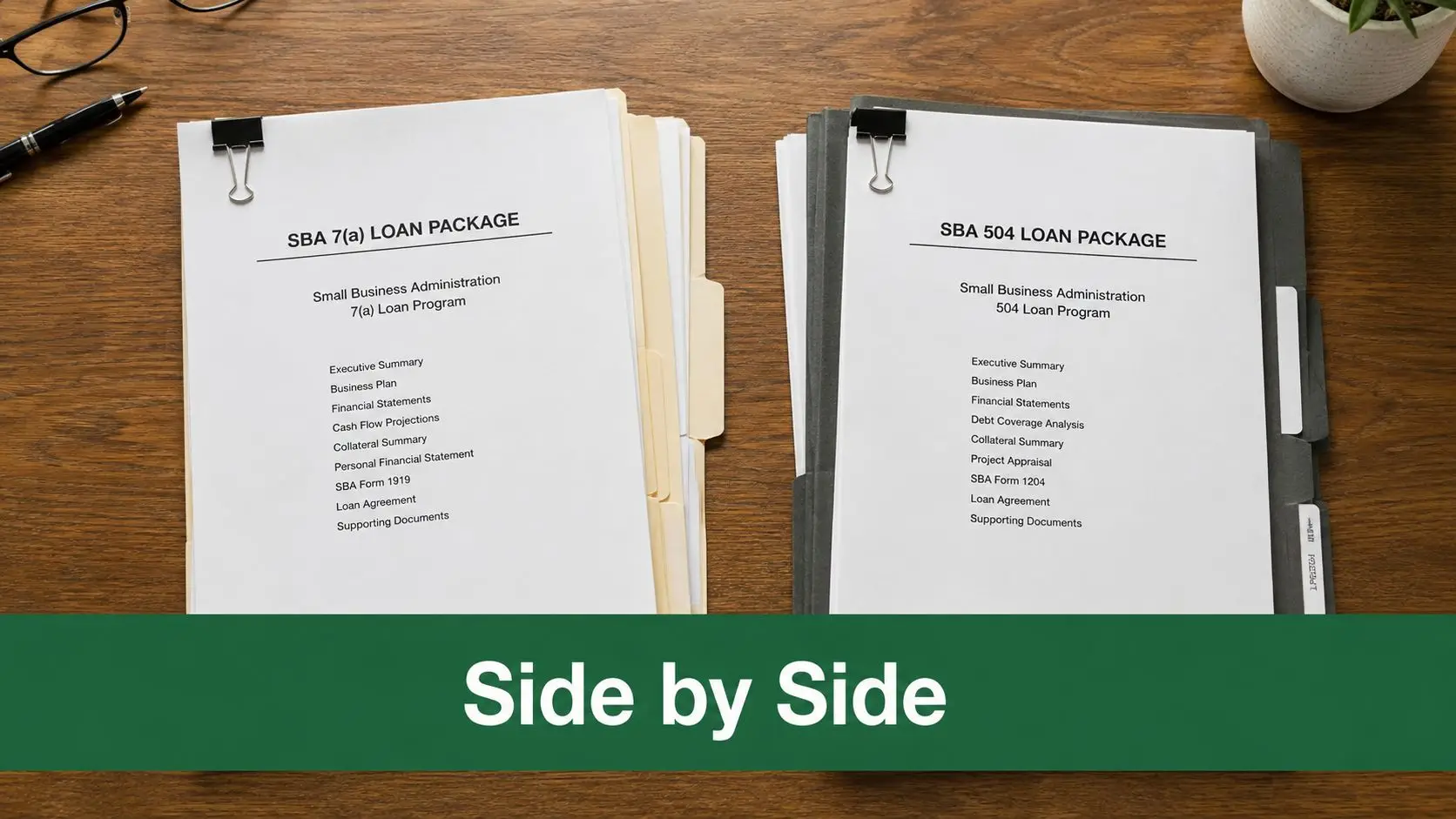
In the second stack, the buyer brings in an investor note that's drafted pari passu with the SBA 7(a) lender on the same collateral pool. The borrower likes this because the parties share the same rank, which can smooth negotiations when no one wants to sit permanently behind someone else.
What changes when the deal goes bad
If that pari passu stack hits a liquidation, the recovery split follows the equal-rank bargain instead of a senior-first waterfall. The SBA lender doesn't get to take everything just because it's the SBA lender, and the investor doesn't get to leapfrog the lender either. They share in line with the claim structure the documents created.
That's also where intercreditor drafting earns its keep. A well-written agreement spells out who can enforce first, whether consent is needed for collateral releases, and how proceeds get divided if one party starts the enforcement process before the other.
For a deal-oriented example of how acquisition structures get negotiated in practice, this commercial flooring contractor pari passu case page shows how equal ranking is used as a financing tool instead of just a legal phrase.
The difference between these two stacks is not cosmetic. One is a senior-plus-subordinate structure. The other is a shared-rank structure where the recovery math changes the moment the collateral is liquidated.
Sample Pari Passu Clause Language and How to Read It
A clean clause usually says the same thing in plain English and legal language. A redacted version might read, “The investor note shall rank pari passu with the SBA lender's secured claim solely with respect to the defined collateral pool, subject to any subordination or standby limitations required under applicable SBA program rules.”
That sentence carries real weight. It limits the equal-rank promise to a specific pool, it avoids implying the investor outranks the SBA lender, and it leaves room for the SBA-required subordination framework to control where federal rules demand it. In an SBA stack, that distinction matters because the SOP can narrow what contract drafting would otherwise seem to allow.
What to watch for in the wording
A weak clause uses equality language without saying what is equal. That can blur priority, enforcement rights, or collateral scope. In a real closing, that kind of loose drafting can leave one side believing it has shared rank while the other side assumes hidden senior rights still survive.
A stronger clause names the exact collateral, the exact class of claims, and the exact treatment if one creditor enforces. It also ties the equal-ranking promise to the intercreditor agreement, so the borrower is not left with two documents that say different things about recoveries.
If you are reviewing paper quickly, an AI contract drafting tool can help spot missing subordination language or inconsistent waterfall terms before counsel finalizes the package. It still cannot replace a lender-side read of the enforcement section, because the drafting has to match the economics, not just the headline label.
A clause that says “pari passu” without defining the collateral and the enforcement rights is usually not enough for an SBA acquisition stack.
For a more detailed legal-business framing around business purchases, this guide to the legal aspects of buying a business with SBA financing is a useful companion because it puts document language in the context of closing risk, not just terminology.
What Pari Passu Means for Borrowers and Lenders
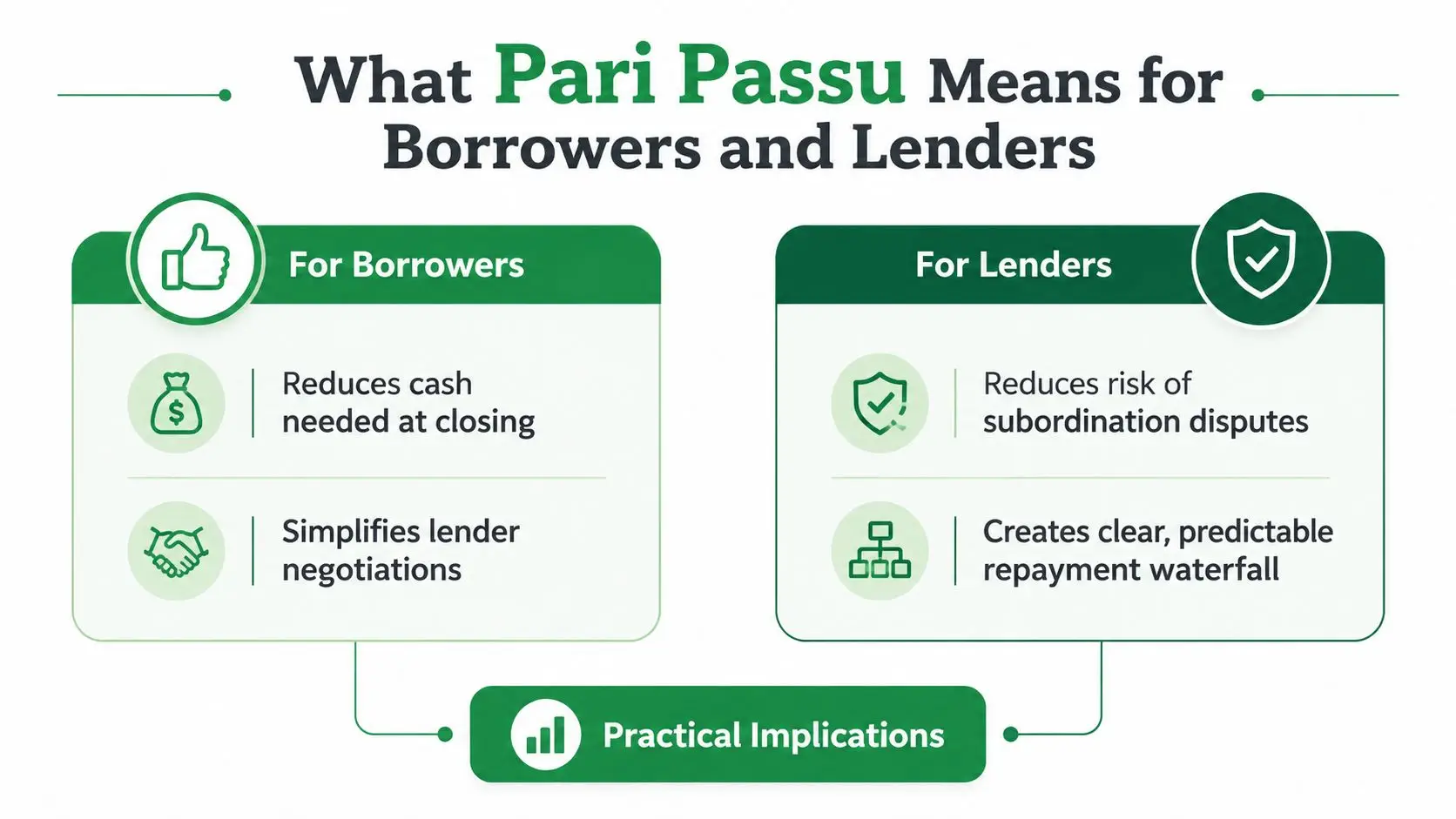
For borrowers, pari passu treatment can make a deal easier to close because it lets aligned capital providers share the same risk bucket instead of forcing one investor or lender to sit permanently below another. That can reduce negotiation friction when a buyer needs multiple sources of capital to make the transaction work.
It also gives the buyer more room to structure a balanced stack. When equal-rank creditors agree on the same treatment, the borrower isn't always forced to bring extra cash just to satisfy a senior-junior hierarchy that nobody wants economically.
The lender side is different
For lenders, pari passu can protect recovery parity, but it also removes the comfort of being first in line. That's why experienced lenders insist on tight covenants, clean default language, and clear rules for collateral releases and enforcement timing.
A practical negotiation point is prepayment treatment. If a structure includes fees or optional prepayments, equal-rank creditors usually want those economics shared pro rata rather than letting one side capture the benefit alone. Another common issue is consent rights, because a lender that shares rank usually doesn't want its collateral position changed without unanimous approval.
A buyer looking at a complex capital stack should compare the economic upside against the loss of control. Pari passu can be efficient, but it also means every party has to live with the same downside mechanics if the deal underperforms.
For collateral planning, GoSBA Loans also publishes material on SBA collateral requirements, which helps borrowers see what's being pledged before they start negotiating equal-ranking terms.
Common Misconceptions That Cost SBA Buyers Money
The biggest mistake is assuming pari passu means equal monthly payments. It doesn't. It means equal rank and equal treatment in the claim stack, while the actual payment schedule can still differ if the documents say so.
Another bad assumption is that an SBA loan and a seller note can always be pari passu. In practice, a standby seller note is usually there because the SBA structure needs it to yield, which is the opposite of a true equal-rank bargain.
Where buyers lose money
Some buyers also think equal ranking removes the need for an intercreditor agreement. That's risky. Even when two creditors share the same rank, the agreement still has to say who can enforce first, how releases work, and how recoveries are split if there's a default.
A final misconception is that pari passu solves control problems. It doesn't. It can create them if the parties never decide who speaks for the collateral, who can object to enforcement, and what happens when one lender wants to move faster than the other.
The cost of getting this wrong is usually not just legal spend. It shows up in delayed closings, broken seller expectations, and last-minute revisions that can push a clean stack into a messy one.
Pari Passu FAQ for SBA Borrowers
Does pari passu affect SBA guarantee eligibility? Not by itself. The SBA side still follows the program rules, and the equal-rank language only matters if it fits within the approved loan structure.
Can a standby seller note be pari passu with an SBA lender? Usually not if the standby terms require the seller to yield. Standby and pari passu are different mechanics.
What happens if one pari passu creditor enforces first? The documents should control that. In a true pari passu structure, recovery still has to be shared according to the agreed ranking and pro rata split.
Does equal ranking change prepayment penalties? Not automatically. Prepayment economics are a separate drafting issue and need to be written into the agreement.
For buyers at term sheet stage, the move is simple. Read the collateral pool, check the standby language, and make sure the equal-rank promise matches the enforcement section before anyone signs.
If you're trying to structure an SBA acquisition stack and want the pari passu language pressure-tested before it turns into a closing problem, GoSBA Loans can help you compare lender options and coordinate the capital stack from term sheet through closing. Visit GoSBA Loans to review how their SBA financing support fits acquisition deals, seller notes, and investor-heavy structures.
