Seller financing means the seller carries part of the purchase price and lets the buyer repay it over time through a promissory note instead of relying on full bank financing at closing. In acquisition deals, it often sits beside SBA debt, because a seller note can help cover the equity gap, reduce the buyer's cash requirement, and make the capital stack work when the lender will not fund the entire price. That structure is laid out clearly in GoSBA Loans' guide to SBA seller notes, and it is one reason seller financing shows up so often in lower-middle-market deals, where sellers and buyers both need a practical path to closing.
For buyers, the question is not whether seller financing sounds useful, but how the note affects lender approval, repayment pressure, and the seller's willingness to stay tied to the business after closing. For sellers, the trade-off is straightforward. They can help close the deal and often support a stronger sale price, but they also keep credit risk on the table until the note is paid.
Table of Contents
- What Seller Financing Means
- How Seller Financing Works Mechanics and Structure
- Seller Financing in a Real Acquisition Deal
- Pros and Cons of Seller Financing for Buyers
- Seller Financing and SBA Loans How They Work Together
- Negotiating Seller Notes and Your Buyer Checklist
What Seller Financing Means
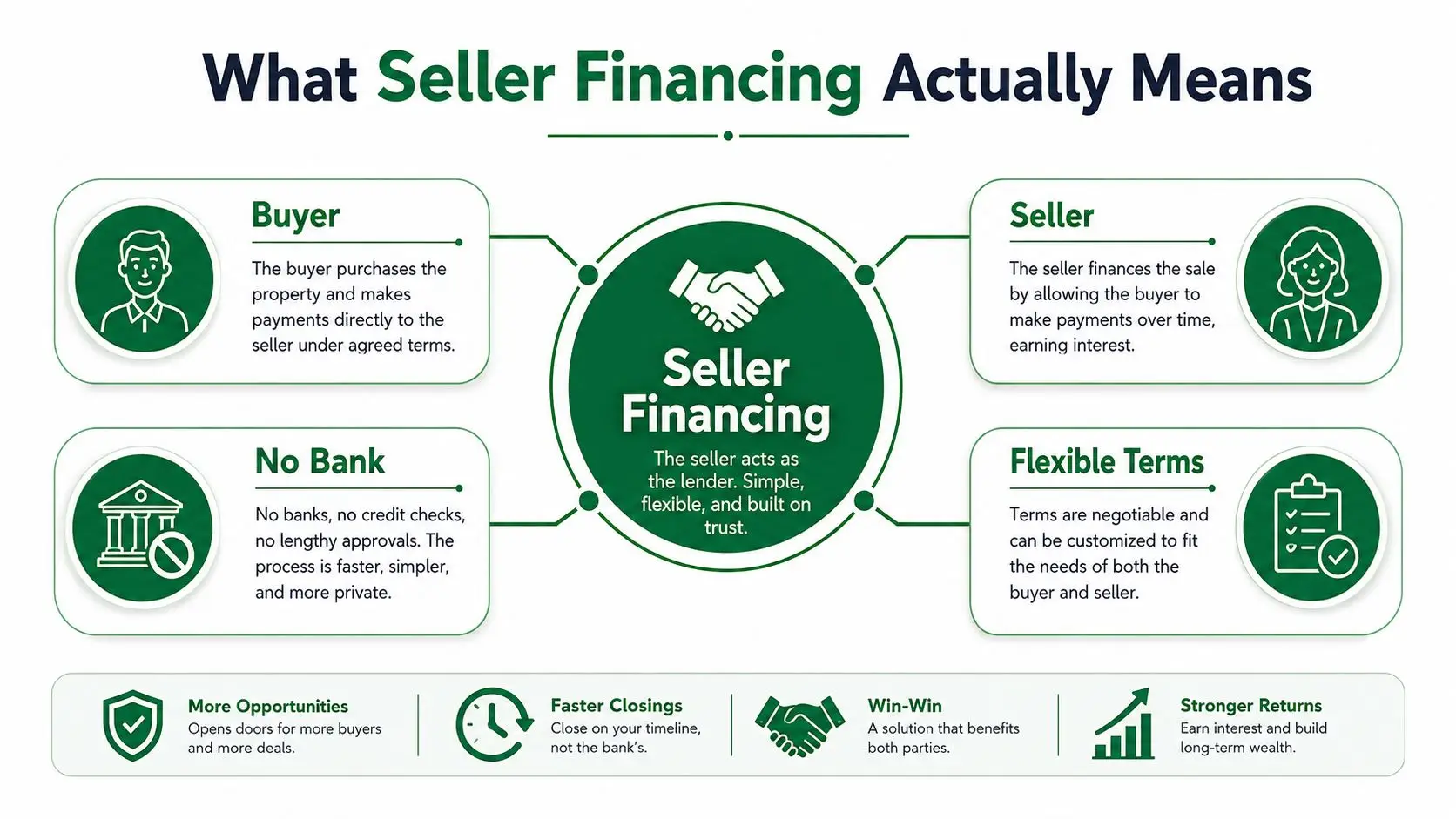
Seller financing means the seller lends part of the purchase price to the buyer. The buyer does not bring all of the cash to closing for that portion, the buyer signs a promissory note and repays the seller over time under agreed terms. If you want a plain-language refresher, see this guide to what seller financing is.
For acquisition buyers, that structure changes the deal math fast. Instead of asking a bank to fund everything, the buyer can combine lender debt, personal cash, and a seller note to close a transaction that might otherwise stall on equity requirements or underwriting friction. That is one reason seller notes show up so often in small-business transactions, especially where the conventional loan amount will not quite cover the full price. Buyers also use them to support deals tied to top investment opportunities for businesses, where the capital stack has to be arranged carefully.
Why buyers care about the definition
The practical value is not the label, it is the power. A seller note can bridge the gap between what a bank will lend and what the seller wants for the business, which is why it has become a normal acquisition tool rather than a workaround.
Practical rule: if a buyer cannot explain who is lending, who is secured, and when repayment starts, the seller note is not ready for closing.
The mechanics are straightforward on paper. The seller becomes the lender, the buyer makes scheduled payments directly to the seller, and the deal closes with a smaller third-party debt requirement than it would otherwise have. In business acquisitions, that structure is often documented as a note for a portion of the purchase price, with terms negotiated by the parties rather than dictated by a bank underwriting box (seller financing mechanics).
Seller financing also fits into SBA-backed deals more often than buyers expect. A seller note can help fill the equity gap, reduce the buyer's out-of-pocket cash at closing, and make the overall structure easier to underwrite when it is drafted the right way. That is why buyers who understand the term have more room to structure a closeable transaction, even when the first pass at financing falls short.
How Seller Financing Works Mechanics and Structure
A seller-financed deal lives or dies on the paperwork. The seller usually signs a promissory note spelling out the amount financed, the interest rate, the payment schedule, and the consequences if the buyer defaults. In acquisition work, that note is often paired with a security document so the seller has a claim against specific collateral if the buyer doesn't pay.
The moving parts that matter at closing
The most important terms are the ones that change risk, not the ones that sound negotiable. A buyer should pay close attention to:
- Note amount. This is the piece of the purchase price the seller is carrying.
- Interest rate. A private note can be priced differently from bank debt because the seller is taking credit risk.
- Amortization and payment frequency. These drive monthly cash flow and how fast principal comes down.
- Security and collateral. This decides what the seller can reach if there's a default.
- Default language. The note should spell out remedies clearly, because vague enforcement language makes the deal harder to finance and harder to unwind.
The legal form matters just as much as the economics. In real estate, seller financing may be documented as a purchase-money mortgage, owner financing, or, in some cases, a land contract where title transfer is deferred until repayment is complete (seller-financing legal forms). Those structures affect lien priority, buyer equity buildup, and remedy rights, so they're not cosmetic choices.
Why the structure changes risk
A clean note is financeable. A sloppy one is a closing problem waiting to happen. That's because the seller is now acting like a lender, and lender-like documents need lender-like precision, especially when the note sits alongside a bank loan or other debt.
A good seller note doesn't just say what gets paid. It says exactly what happens when the buyer misses, prepays, refinances, or sells.
In commercial transactions, that clarity matters even more because the note may be one piece of a larger capital stack. A buyer can't treat it like informal seller goodwill. It needs to be documented, secured, and coordinated with the rest of the closing package so the lender, title company, and attorney all understand where it sits.
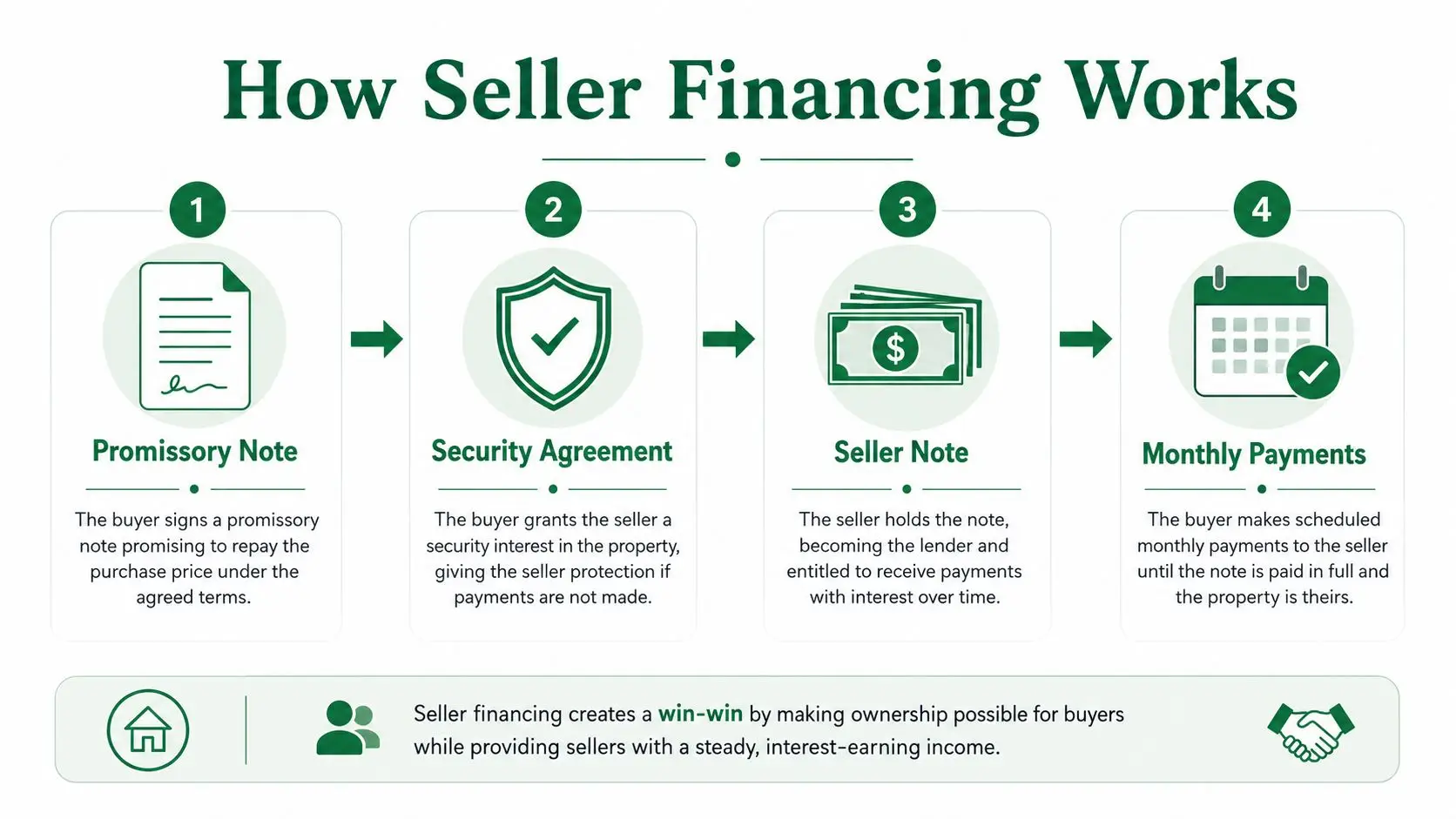
The final point is simple. Seller financing works best when the legal form matches the deal's real risk profile. If the note doesn't have clear repayment and default provisions, it may look flexible but behave like a closing risk instead of a financing solution (seller note structure guide).
Seller Financing in a Real Acquisition Deal
A $1.5 million acquisition shows how this works in the world. Suppose the buyer uses an SBA 7(a) loan for the main debt, the seller carries a note for part of the price, and the buyer contributes the balance in cash. The capital stack is what matters, not just the headline purchase price.
A practical capital stack
In that kind of deal, the seller note does two jobs at once. It reduces the cash the buyer needs at closing, and it gives the lender comfort that the seller still has skin in the game after the sale. That combination often makes the transaction easier to underwrite than a deal built only on bank debt and buyer cash.
The structure also changes negotiation. If the seller is willing to defer part of the price, the buyer can often preserve liquidity for working capital, integration costs, or reserves after closing. That's why seller financing gets discussed so often alongside business acquisition planning, not just real estate financing. A useful way to think about acquisition targets and price structures is to look at the broader market for top investment opportunities for businesses and then decide which deals need flexible capital to close.
Here's the part buyers underestimate. A seller note can make a deal possible, but the buyer still has to live with the repayment schedule. If the note amortizes too quickly or lands a balloon too early, monthly pressure can undo the benefit of the lower down payment.
What changes for the buyer
The buyer's cash requirement at closing is lower than it would be in an all-cash or bank-only structure. That's a real advantage, but it's not free money. It's deferred purchase price with legal obligations attached.
If the seller note is the only reason the deal closes, the buyer should treat it as a core part of underwriting, not a side term in the LOI.
That's also where acquisition strategy and structure intersect. For buyers comparing deals, seller financing can help identify which opportunities are fundable under SBA-style capital stacks and which ones only look attractive on paper. This acquisition financing guide helps frame the broader decision before the note gets negotiated.
The main lesson from a real deal is this. Seller financing isn't just a cheaper way to borrow. It's a way to reshape the closing so the buyer, seller, and lender can all get to yes.
Pros and Cons of Seller Financing for Buyers
Seller financing is often presented as the flexible option, and it is. Buyers who stop at convenience usually miss the trade-offs. The strongest advantage is access, especially when conventional debt will not cover the full purchase price or when the deal needs a smaller cash outlay to close (buyer access angle). It can also fit into a broader acquisition plan, including buying a company with little or no cash down, when the rest of the capital stack is structured correctly.
Seller Financing Pros and Cons for Buyers
| Pros | Cons |
|---|---|
| Helps close deals that bank-only financing can't support. | Can carry higher pricing than standard SBA debt because the seller is taking credit risk. |
| Reduces the buyer's cash needed at closing. | Creates repayment pressure if the note has a short term or balloon payment. |
| Can make the seller more willing to negotiate on price or structure. | Requires careful legal drafting, recording, and lien coordination. |
| Can speed up execution when the seller is ready to move and the bank process is slower. | Can be harder to unwind if the deal sours, because the seller is now a creditor. |
| May bridge a lender gap without adding another outside equity source. | Can create complications if the note conflicts with other debt documents. |
advantage is access, not magic. A buyer may accept less favorable pricing or shorter repayment terms in exchange for getting the deal done when traditional credit is not enough. That is often a rational trade, especially in acquisitions where timing matters more than squeezing out the lowest possible rate.
The downside is concentrated risk. The seller is now exposed to the buyer's performance, and the buyer is exposed to the seller's willingness to paper the deal correctly and live with the note terms after closing. If the documents are thin, the transaction can become messy fast.
What works and what doesn't
What works is a note that fits the buyer's post-close cash flow and the lender's underwriting rules. What doesn't work is a casual agreement that leaves title, collateral, or default remedies vague.
A buyer should also be careful about using seller financing as a substitute for weak diligence. If the business cannot support the debt, a seller note just postpones the problem. It does not remove it.
The best use case is straightforward. Seller financing is strongest when it bridges a temporary gap, lowers closing cash, and still leaves enough room for the business to service all debt comfortably. If it does those things, it is a useful tool. If it only makes the deal look easier than it is, it can become expensive delay.
Seller Financing and SBA Loans How They Work Together
Seller notes become especially useful inside SBA 7(a) and 504 structures because they help solve the exact problem many buyers face, not enough cash at closing, or not enough lender appetite for the full price. In SBA acquisitions, the seller note is not just a standalone financing trick. It can be part of the buyer's equity story, the capital stack, and the lender's comfort with the transaction.
Where the note sits in an SBA deal
In practice, the seller note can sit alongside bank debt and, in some cases, other layers of financing. That matters because lien priority and repayment order affect how safe the structure looks to the lender. If the note is behind a senior lender, the lender needs to know the second position won't interfere with repayment or enforcement.
Commercial transaction sources often describe seller notes as one piece of a broader stack, which is the right way to think about them. They're rarely the whole deal. They're the flexible piece that helps get the rest of the financing across the line.
The SBA side is where buyers need to be precise. The SBA SOP and lender overlays control how the note is documented, whether it counts toward equity injection, and what standby features may be required. That's the part many buyers miss when they ask only whether the seller is “willing to carry paper.” Willingness is useful. Compliance is what closes the deal.
Why SBA rules matter more than the headline term
A seller note can look attractive on paper and still fail lender review if it doesn't match SBA expectations. The note may need standby treatment, the documents may need to show who is repaid first, and the lender may want proof that the structure doesn't weaken the borrower's obligation to inject real capital.
In SBA work, the question isn't just “Will the seller finance it?” The real question is “Will the lender count it, and on what terms?”
That's why deal teams pay so much attention to documentation order. The seller note, bank note, equity injection, and closing deliverables have to line up. If they don't, underwriting slows down or stops.
For buyers working toward a smaller cash injection, seller notes can be the bridge between wanting to buy and being able to close. The details matter enough that many buyers benefit from a lender and advisor who already understand the SBA seller-note rules, like those summarized in this 2026 SBA seller note update. When the structure is right, the note can support approval odds instead of threatening them.
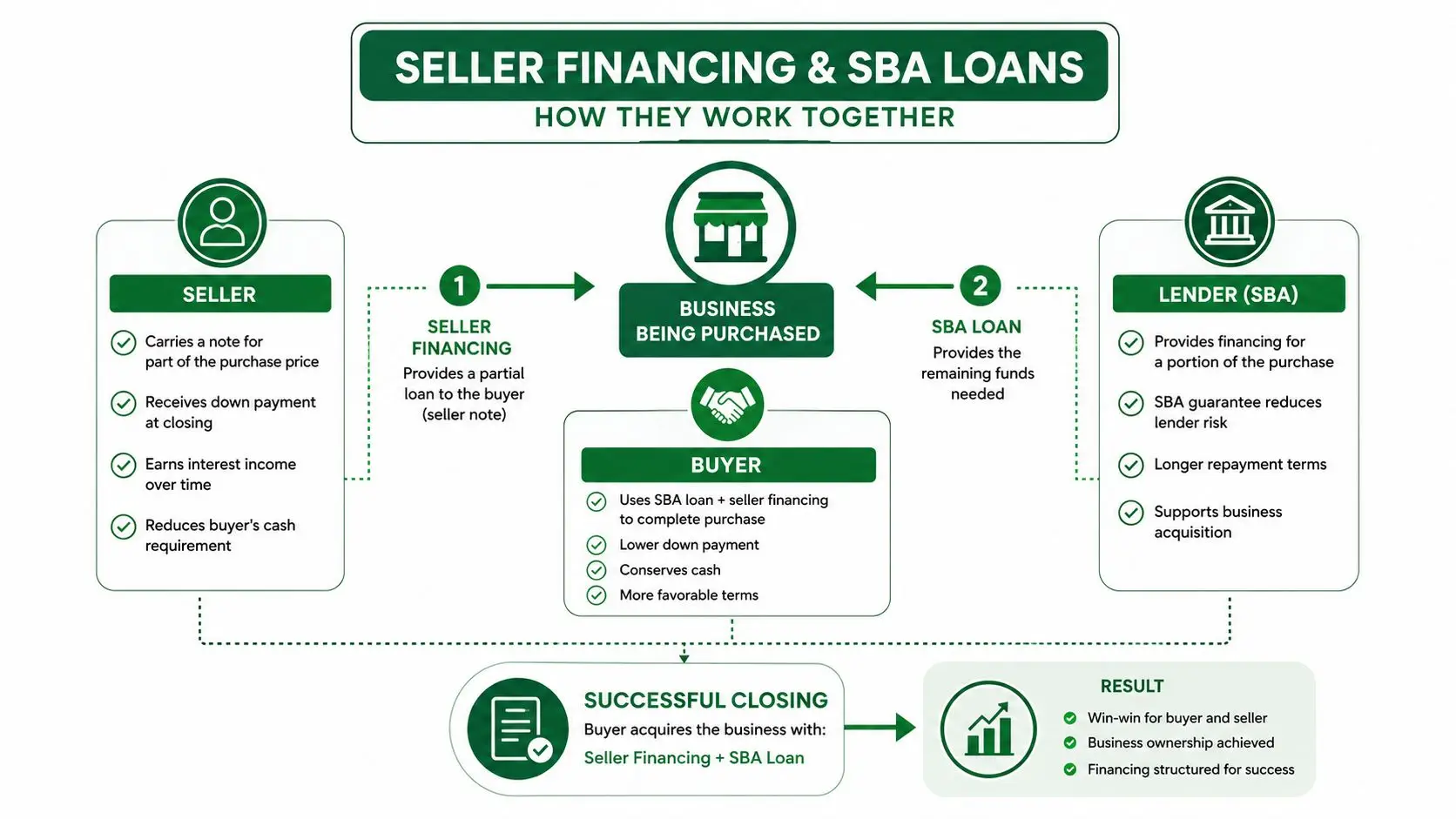
The cleanest takeaway is practical. Seller financing is most useful in SBA deals when it helps reduce cash friction without creating a hidden lien or repayment problem that the lender can't live with.
Negotiating Seller Notes and Your Buyer Checklist
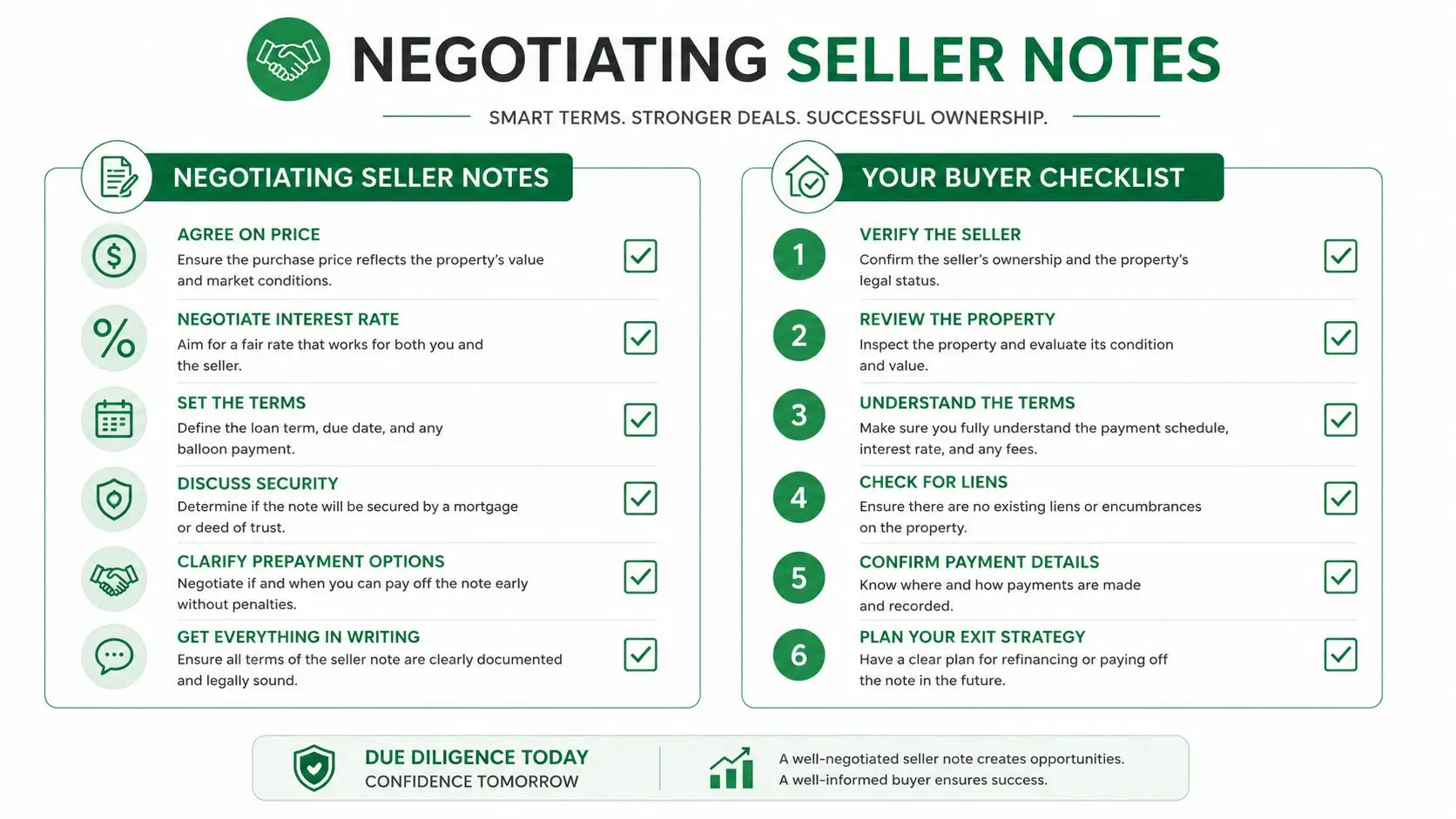
The best seller notes are negotiated backward from the buyer's post-close cash flow. Start with what the business can comfortably support, then work the note term, payment timing, and collateral around that reality. If the note is too aggressive, it becomes a second closing problem after the closing itself.
Terms worth pushing on
Buyers usually have the most ability to influence the terms that affect monthly pressure and exit flexibility.
- Note amount. Keep the seller carry tied to the gap the deal needs.
- Interest rate. Private credit is negotiable, so the rate should reflect the deal's risk and the buyer's other financing.
- Term length. Longer terms usually help a buyer manage cash flow, but they can also invite lender scrutiny if they don't fit the rest of the stack.
- Balloon payment. A balloon can be manageable if there's a realistic refinance path, but it can become a trap if the business won't support a takeout.
- Security package. Buyers should know exactly what the seller can foreclose on and what's already pledged to another lender.
Buyer checklist before signing
- Have an attorney review the note and security documents. SBA-friendly structure is not the same as a handshake deal.
- Ask the lender whether the note counts toward the equity injection. Don't assume it will.
- Confirm lien priority. Title and UCC or mortgage positions need to be clear before closing.
- Check for balloon timing. The repayment schedule should fit the business, not just the seller's preference.
- Verify default remedies. If the note is silent or vague, that's a red flag.
- Make sure every financing document matches. Purchase agreement, note, loan docs, and closing statement should all tell the same story.
A seller note is safest when everyone at the table can explain it the same way on the first read.
For buyers who want a practical execution partner, GoSBA Loans helps structure SBA acquisition financing, coordinate lender proposals, and align seller notes with the rest of the closing package. If you're buying a business and want the seller note to help you close instead of complicate the file, start the conversation early and bring the note terms into the financing plan before the LOI turns into a signed deal.
