Most advice about buying a business with SBA financing starts with the wrong question. It asks how much the business costs before it asks whether the deal is fundable. In practice, the structure of the transaction usually decides whether the loan gets approved, whether the buyer can keep enough cash for the transition, and whether the seller will take the offer seriously.
That matters even more in buying Boing business situations, where the first-time buyer often sees one headline number and misses the financing mechanics behind it. A deal that looks affordable on paper can collapse if the equity injection, seller note, working capital, or repayment term is mismatched to the business. A deal that looks too expensive can become workable if it's structured correctly, especially under the SBA 7(a) framework that supports business acquisitions at scale.^1 ^2
Table of Contents
- Sourcing and Valuing Your Target Business
- The Art of Structuring the Deal
- Navigating Comprehensive Due Diligence
- Securing SBA Financing for Your Acquisition
- From Term Sheet to Closing Day
- Essential Checklists for a Smooth Acquisition
- Frequently Asked Questions About Buying a Business
Sourcing and Valuing Your Target Business
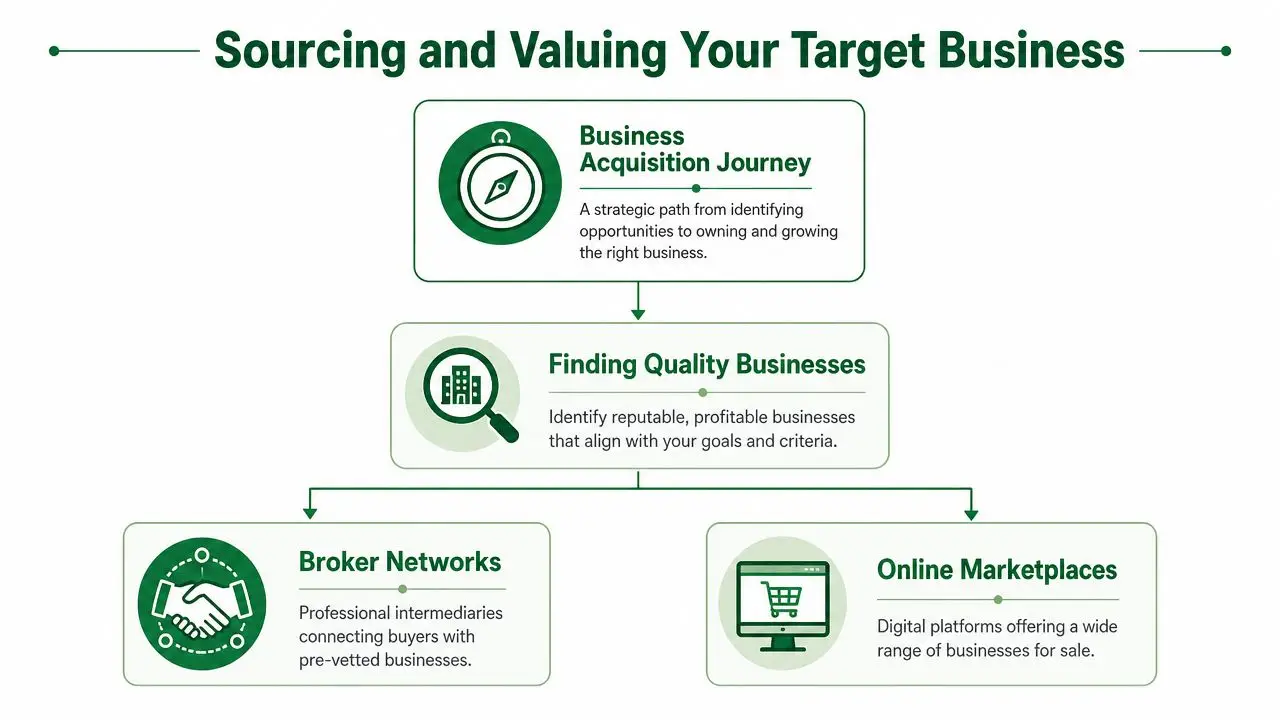
The best acquisition searches rarely start with a dream business, they start with a disciplined list of targets. Broker networks, online marketplaces, and off-market outreach each play a different role, and the smart buyer uses all three. Brokers usually bring pre-screened opportunities and cleaner deal flow, while marketplaces surface a broader set of listings that need more filtering. Off-market deals take more work, but they can produce better terms when the seller is motivated and the buyer can solve a specific transition problem.
Start with the market you can actually finance
SBA acquisition lending tends to cluster in a practical middle band, not the huge headline deals people imagine. Historical data from FY2020 to FY2025 shows the modal transaction band for SBA acquisition lending is $350,000 to $750,000 ^2. That tells you something useful. Most SBA-backed buyouts are owner-operated businesses where cash flow, lender confidence, and transition risk matter more than prestige.
A realistic first pass should use Seller's Discretionary Earnings, or SDE, as the anchor. SDE is the cleaner lens for a small business because it normalizes owner pay and discretionary expenses, which makes it easier to compare one listing against another. Then you apply a market multiple that fits the business type, the quality of records, customer concentration, and how dependent the seller is on daily operations. The multiple matters, but only after the earnings number is trustworthy.
Practical rule: don't anchor on the asking price first. Anchor on the income stream, then test whether the business can support debt, a transition, and working capital without starving the operation.
For a buyer trying to stay disciplined, the better question is whether the business is priced in line with what a lender and a buyer can both defend. If the seller can't explain the numbers cleanly, the offer should be lower or the deal should be passed over. A valuation that only works if everything goes perfectly is not a valuation, it's a hope.
If you want a lender-facing breakdown of how business value gets judged, the internal guide on business valuation for SBA loans is a useful companion.
The Art of Structuring the Deal
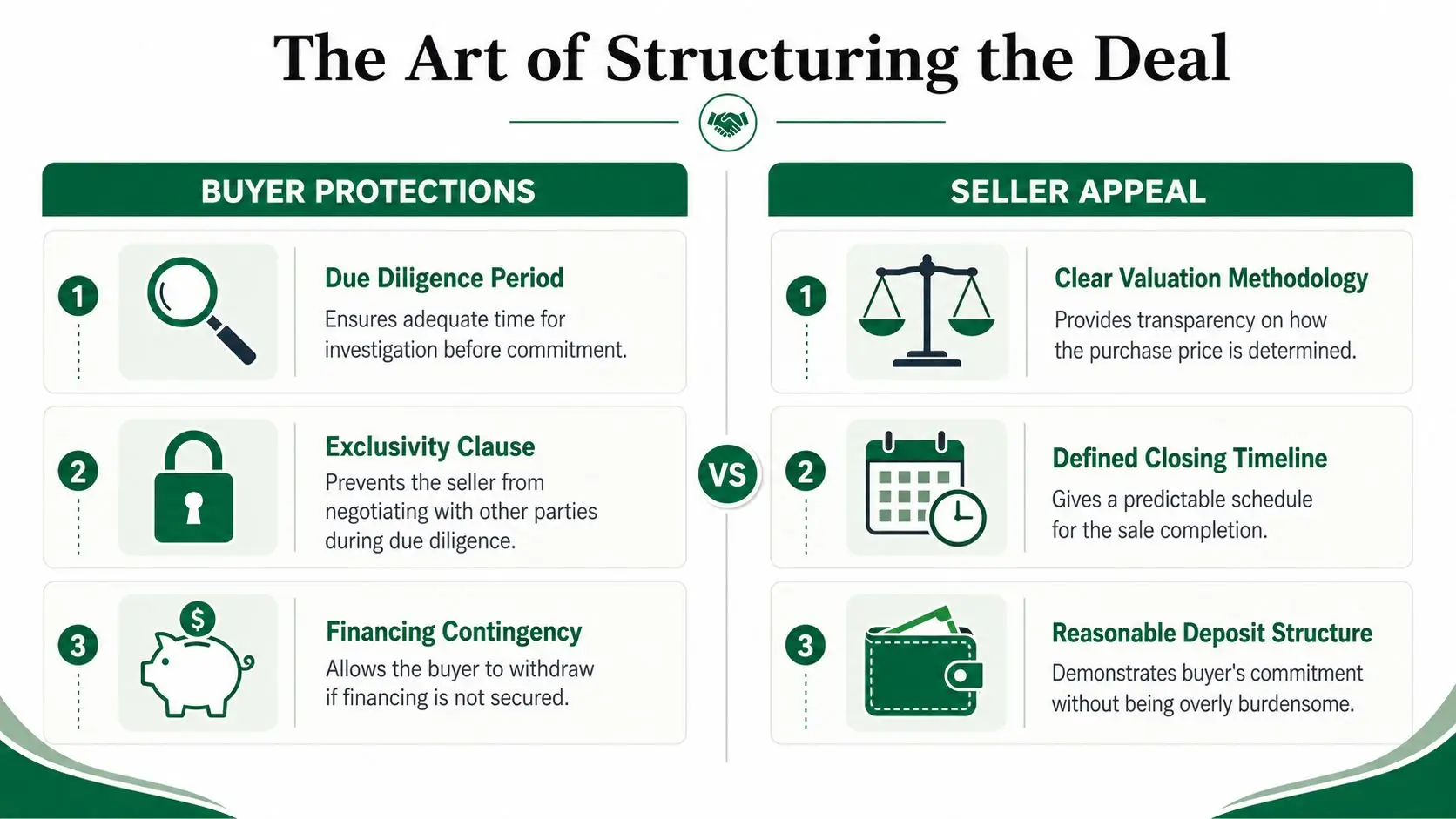
Price gets the attention, but structure wins the financing. Two offers can list the same headline number and produce very different approval outcomes, because the lender is not only underwriting the business, it's underwriting the way the buyer and seller split risk. That's why a thoughtful Letter of Intent should protect the buyer, reassure the seller, and leave room for the loan to clear SBA rules without constant renegotiation.
Build an LOI that helps the deal survive diligence
A strong LOI usually does three jobs at once. It gives the buyer enough time to inspect the business, keeps the seller from shopping the offer while diligence is underway, and ties the purchase price to a defensible methodology. Sellers like predictability, and buyers need escape valves if the numbers or contracts don't hold up.
The most important mistake I see is buyers treating the LOI like a courtesy note instead of a risk-control document. That mistake gets expensive when a seller keeps talking to other buyers, refuses to disclose records, or pushes for a closing schedule that leaves no room for lender review. A clear LOI lowers friction later because everyone already knows what success looks like.
Deal terms matter more than ego terms. A seller who accepts a slightly lower price but cleaner process often closes faster than a seller who chases the highest nominal number with shaky financing.
Use seller standby to lower the cash barrier
The old rule people repeat is that SBA acquisitions always require 10% cash down. That is too rigid. In many real deals, the buyer puts in 5% and the seller carries the remaining 5% on full standby, which can satisfy the equity side of the structure and dramatically reduce the buyer's upfront cash burden ^3. That doesn't make the deal easy, and it doesn't remove underwriting scrutiny, but it does change what's possible for a first-time buyer.
That's why the structure often matters more than the listed purchase price. A buyer with limited liquidity can still pursue the right business if the seller is willing to subordinate part of the price and the lender is comfortable with the repayment profile. For a deeper look at how seller financing fits into acquisition planning, the seller financing for business acquisition guide is worth reading before you negotiate terms.
Navigating Comprehensive Due Diligence
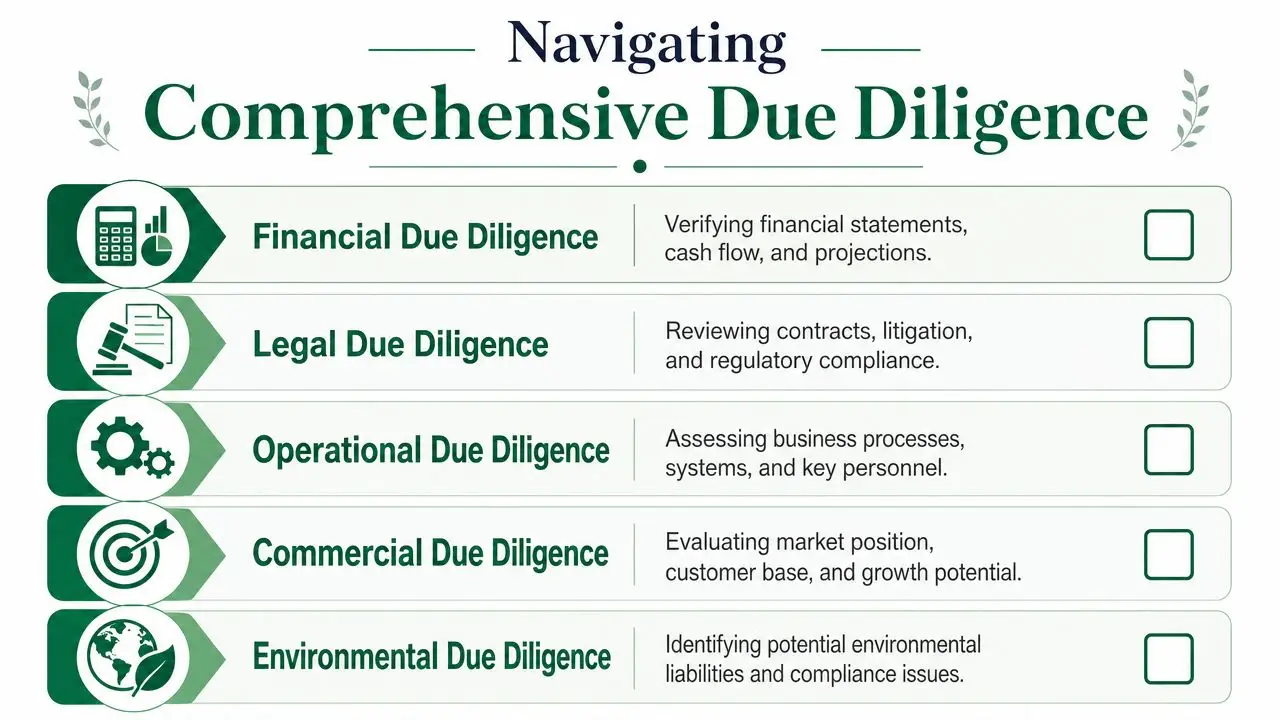
Due diligence is where hopeful buyers turn into informed buyers. It's not just a document review, it's a stress test of the entire transaction, because the seller's story only matters if the financials, contracts, operations, and compliance records support it. Strong diligence doesn't kill good deals, it prevents bad surprises from becoming your problem after closing.
Check the numbers before you trust the story
Financial diligence starts with the seller's tax returns, profit and loss statements, and balance sheets. You're looking for consistency, not perfection. If revenue jumps without a matching explanation, if margins are erratic, or if owner perks are buried in odd expense lines, the business may be less stable than the teaser showed.
Legal diligence is just as important. Contracts, leases, licenses, customer agreements, litigation history, and compliance gaps can all affect whether the loan survives underwriting and whether the business can operate on Day 1. Operational diligence is where buyers learn whether the business depends on one person, one customer, one vendor, or one software workaround that no one else understands.
Use tools that expose the hidden details
A practical due diligence process also means reading documents at scale, not just skimming them. That's where a resource like contract data extraction guide can be useful if you're trying to pull obligations, renewal dates, and other contract terms into a usable format. It's not a substitute for counsel or lender review, but it can make the first pass faster and less error-prone.
The buyer should also treat customer concentration, key employee retention, and system reliability as real risks, not side issues. If the business can't function without the seller at the center of every decision, then the transition is going to be harder than the glossy numbers suggest. For a more detailed framework, the internal business acquisition due diligence checklist for SBA loan buyers is a solid place to keep your review organized.
Securing SBA Financing for Your Acquisition
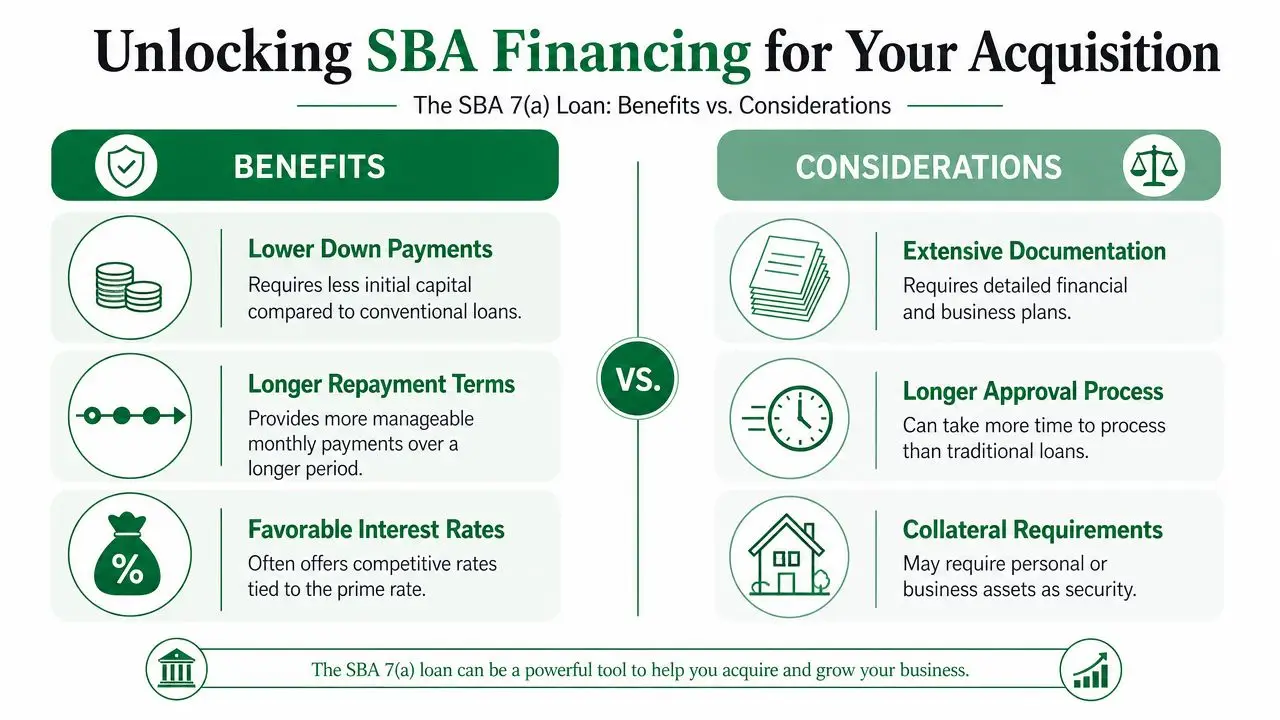
SBA financing works because it stretches repayment, reduces lender risk, and lets buyers acquire businesses with less cash than a conventional loan usually requires. The main acquisition tool is the SBA 7(a) loan. It can finance the purchase of an existing business, working capital, real estate, closing costs, and even the SBA guarantee fee, all within the rules of the program ^2. For deals with a significant real estate component, the SBA 504 structure can also matter, especially when the property is a big part of the acquisition.
Know the hard limits before you chase a deal
The 7(a) loan cap is $5 million per borrower, and that is a real ceiling, not a marketing number ^4. That cap should shape your search from the start. If the target business needs more capital than one SBA loan can carry, the deal structure has to do more work, or the acquisition needs to be resized before you spend weeks on a file that cannot clear underwriting. For larger transactions, a layered structure can sometimes combine a 7(a) loan with a 504 CDC loan, which gives buyers more room on the financing side ^1.
The equity rule is also mandatory. For SBA 7(a) business acquisitions, the buyer must inject a minimum equity of 10% of total project costs, though seller financing on full standby can count toward that requirement only up to half of the SBA-required equity injection ^5. Deal structure matters here more than most first-time buyers realize. If the seller refuses standby terms, the buyer may need more cash at close, a cleaner capital stack, or a different target. The internal SBA loan guide for buying a business is useful if you want to compare common acquisition structures before you get too far down the road.
Understand why lenders like the program
The SBA guarantee is part of the reason lenders participate. For loans of $150,000 or less, the guarantee is 85%, and for larger loans it is 75% ^6. That risk-sharing lowers the lender's exposure and makes it possible to fund acquisitions that conventional underwriting may treat as too thinly capitalized.
A personal guarantee is still part of the bargain. Owners with 20% or more equity generally must guarantee the loan, and the borrower needs to show real repayment ability with the right financial documentation ^7. GoSBA Loans fits into this stage as one brokerage option that matches borrowers with lenders from its network and coordinates the financing process. The practical test is simple. The lender wants a deal where the buyer has real skin in the game, the seller has structured the transition correctly, and the business can support the debt without leaning on hope.
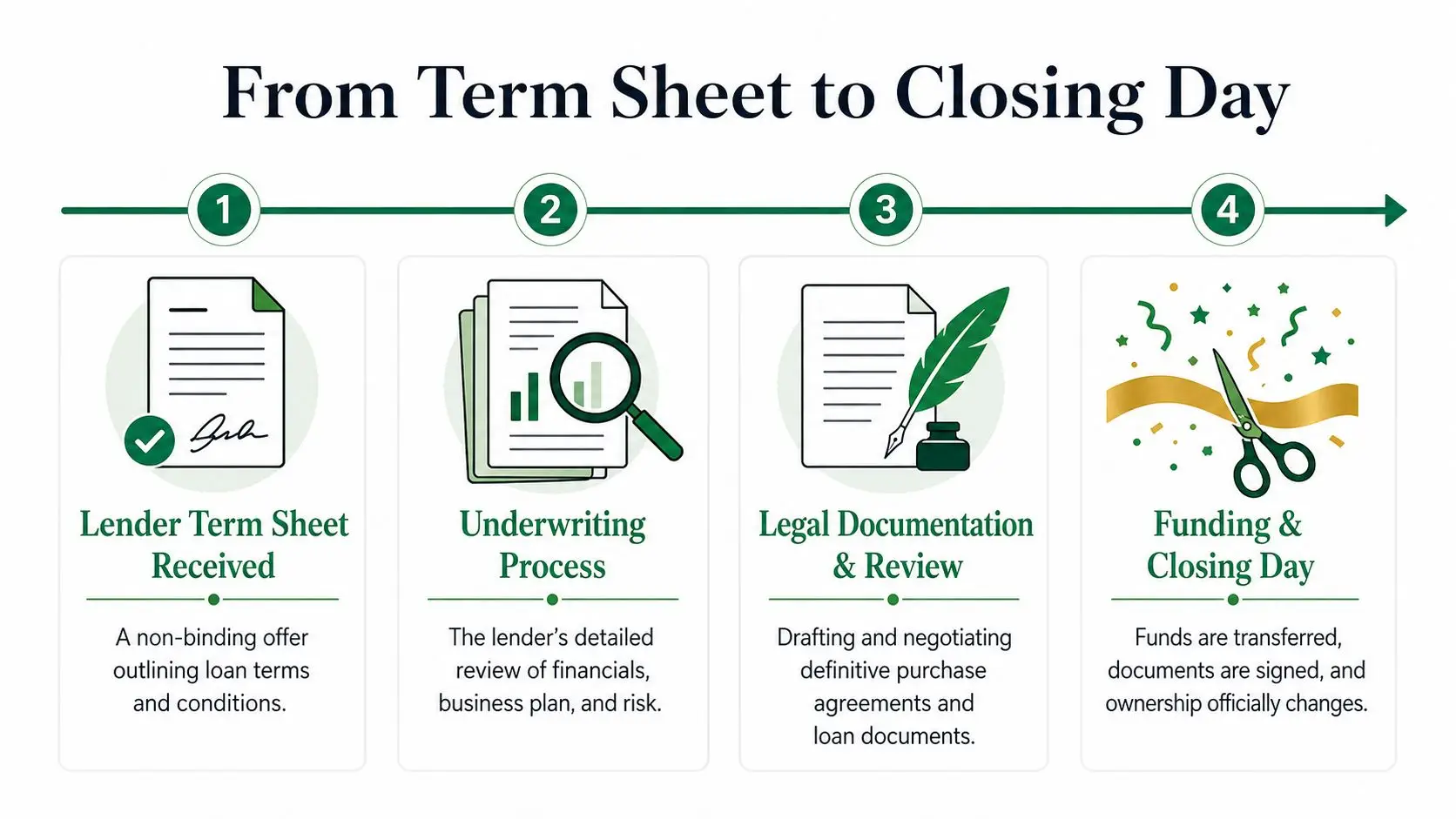
From Term Sheet to Closing Day
A term sheet is a sign that the lender is willing to keep going, not a signal that the work is done. The file still has to clear underwriting, legal review, third-party reports, and final SBA authorization. That part of the process moves quickly only when the buyer answers questions fast and the deal file stays consistent. It slows down when documents are missing or the business story changes under review.
Read the term sheet like a lender, not like a buyer
The term sheet is where buyers often focus on the purchase price and miss the financing terms that control whether the deal closes. Maturity, collateral, and closing conditions shape the lender's view of risk, and they can affect whether the acquisition fits SBA underwriting at all.
The loan maturity deserves close attention. For standard acquisitions without significant real estate, the maximum maturity is 10 years, but if the purchase includes commercial real estate that represents 51% or more of the total value, the maturity extends to 25 years ^1. That longer term can reduce monthly pressure and make the debt service test easier to satisfy.
The pricing structure matters too. For loans above $350,000, the rate generally sits at Prime, or the SBA Optional Peg Rate, plus a capped spread, which keeps pricing more predictable even though the rate can still move with market conditions ^1. Buyers should review the maturity, collateral expectations, and any closing conditions before treating the term sheet as settled.
Expect third-party reports and legal cleanup
Once underwriting starts, lenders often order valuations, environmental work, and other third-party reports. Those steps can slow the file if the parties are not ready, but they are part of the process. The lender is checking that the asset supports the purchase price and that there is no hidden risk in the collateral package or lease structure.
The delays usually come from people, not the SBA. A seller who is slow with records, a buyer who takes too long to respond, or a broker who does not coordinate the next document can all push closing back. The internal from LOI to closing timeline helps if you want a clearer view of how the sequence usually unfolds.
Buyers also need to line up insurance before closing. The policy terms have to fit the lender's requirements and the business's actual risk profile, so Business insurance for Florida companies is worth reviewing early if the acquisition is tied to a Florida operation.
Keep the file moving by answering lender questions the same day whenever possible. The fastest closings usually come from buyers who treat responsiveness as part of the purchase price.
Essential Checklists for a Smooth Acquisition
A clean acquisition usually looks calm because someone treated it like a transaction and an operating handoff from day one. The buyer who keeps documents organized, answers lender questions quickly, and tracks closing tasks in order usually has a much easier path than the buyer who tries to rebuild the file after underwriting begins. That matters even more when the purchase structure has to support both the loan and the cash needed to run the business after closing.
Loan application checklist
The lender cannot move a file forward without a complete package. The exact request list changes by lender, but the core items should be ready before the deal gets too far along.
- Personal financial statement: Show your liquidity, liabilities, and outside obligations clearly.
- Three years of seller tax returns: Lenders use these to test whether the business story matches the reported performance.
- Interim financials no older than 90 days: Fresh numbers matter because old statements do not support a live underwriting decision.
- Purchase agreement or LOI: The lender needs the transaction terms to understand what is being financed.
- Business financial projections: These help when the transition, ownership change, or working capital plan needs a clear explanation.
- Personal guarantee information: Required for qualifying owners and part of the lender's risk review.
Deal structure affects how this package is read. A clean asset purchase with clear seller carry terms, working capital treatment, and closing conditions is easier for a lender to fund than a deal that leaves too many moving parts unresolved.
If you use advisory help, a brokerage can save time by packaging lender-ready narratives and projections. The value is less about selling optimism and more about presenting a file underwriters can review quickly without chasing missing pieces.
Post-closing checklist
Closing does not mean the business is safe. It means the risk has moved from the seller's desk to yours, so the first weeks should be planned before wire day.
- Reconcile Day 1 cash needs: Buyers should calculate working capital from the business's actual cash cycle, not a generic percentage of the purchase price ^8.
- Confirm insurance coverage: If the business has physical assets, vehicles, liability exposure, or employees, the policy needs to be active on time. A practical resource for this is Business insurance for Florida companies, which can help frame the coverage conversation even if your business is in another state.
- Transfer banking, payroll, and vendor access: These are operational items, but delays turn them into financial issues fast.
- Meet key employees immediately: Continuity matters, and staff need to hear what changes and what does not.
- Review recurring obligations: Rent, software, lease renewals, and service contracts should be tracked before they surprise you.
The biggest post-closing mistake is underestimating working capital. A business can be profitable and still run short on cash if collections lag, payables come due quickly, or transition costs show up faster than expected. Closing structure and cash planning have to work together, or the buyer ends up with a loan the business can support on paper but not in practice.
Frequently Asked Questions About Buying a Business
What credit score do I need for an SBA acquisition loan?
A borrower generally needs at least 650 to qualify for an SBA 7(a) business acquisition loan. Some lenders set higher internal standards, but 650 is the floor that comes up most often in acquisition financing. A stronger score can help the file, but it does not make up for a weak deal structure or thin cash flow.
How much seller history does the lender need?
The lender typically wants three years of tax returns and interim financial statements no older than 90 days. That gives the underwriter a long view of the business and a current snapshot of how it is performing now. If the numbers do not tie out, expect more questions before the deal moves ahead.
Can I buy a business if I don't have a lot of cash?
Yes, but the structure has to support the financing. The standard equity rule is 10% of total project costs, though seller standby can sometimes cover part of that requirement. In the right deal, a buyer's actual cash need can be lower than most first-time buyers expect, but only if the lender agrees that the structure still leaves enough skin in the game.
What kills these deals most often?
Weak records, unrealistic pricing, and cash flow that cannot carry the debt are the usual problems. A business that looks fine in a listing but depends on the owner for every major function is also harder to finance cleanly. The lender needs confidence that the business will operate after closing, not just that it looked good on paper.
If you are serious about buying a business and want the deal structured correctly from the start, connect with GoSBA Loans and get the financing conversation moving before you lock yourself into the wrong offer.
