You found the business, the seller's open to a deal, and the bank still isn't giving you enough room on price or down payment. That's the moment when seller financing stops sounding like a real-estate term and starts looking like the piece that can make the acquisition close.
In business deals, seller financing is a private arrangement where the owner acts as the lender and finances part of the purchase price directly with the buyer, often through an owner-financing structure or purchase-money mortgage, rather than a bank loan (Chase). In practice, that means the buyer makes negotiated payments to the seller, and the seller carries part of the risk until the note is repaid.
For a first-time buyer using SBA debt, the question isn't whether seller financing exists. Instead, it's how it changes the cash outlay, lender approval, and the actual path to closing. The biggest mistake I see is treating the seller note like a side detail instead of a core part of the capital stack.
Table of Contents
- What Is Seller Financing in a Business Acquisition
- How Seller Financing Works Step by Step
- Common Seller Financing Structures Explained
- Pros and Cons for Business Buyers and Sellers
- How Seller Financing Works with an SBA Loan
- The Essential Legal Tax and Due Diligence Checklist
- Frequently Asked Questions About Seller Financing
What Is Seller Financing in a Business Acquisition
A buyer finds a solid business, the bank is comfortable with the numbers, but the lender still will not fund the full purchase price. The seller agrees to carry part of the deal, which reduces the buyer's cash needed at closing and can keep the transaction moving. That is the practical answer to what is seller financing in an acquisition.
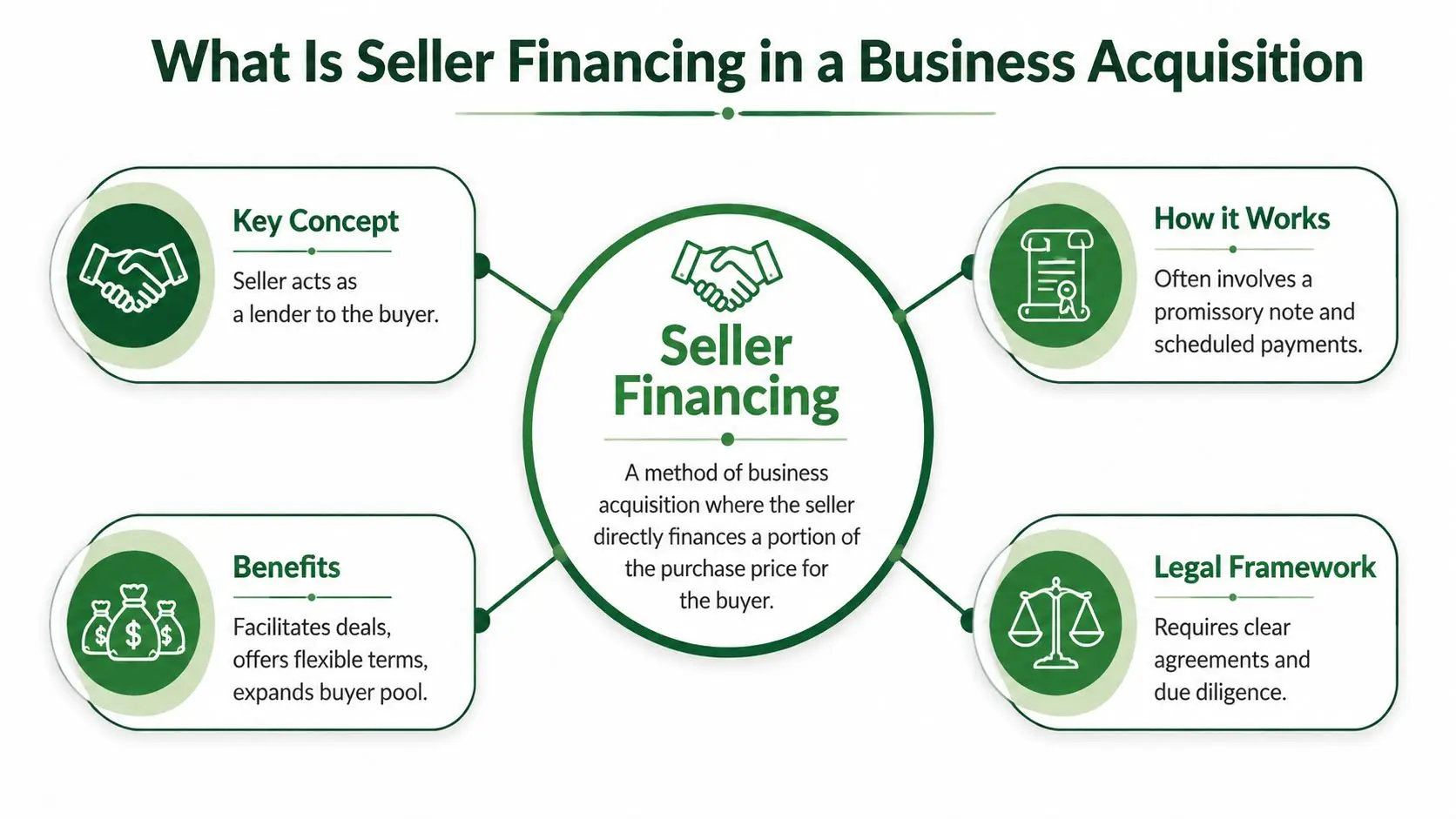
Seller financing means the seller becomes the lender for part of the purchase price. The buyer and seller agree directly on loan terms, and those terms vary deal by deal, which is why this structure appears in business acquisitions and in other asset deals, including seller financing for land buyers. In a business purchase, the seller note is usually documented as a promissory note tied to a deferred portion of the price, not as a casual verbal promise.
The practical value is in the deal structure. A bank loan follows the lender's underwriting rules, while seller financing can fill a valuation gap or cover a financing shortfall without forcing the buyer and seller to reopen the entire price discussion. In an SBA-backed acquisition, that often helps the seller stay in the deal and keeps the buyer's cash outlay within reach. For buyers who are still deciding how to structure the financing stack, the basics are also covered in this guide on how to finance a business acquisition.
A seller note should be treated as real debt from the start. It affects lender approval, closing documents, repayment priority, and the buyer's total cash needed at closing.
A good acquisition broker will map the note against the rest of the capital stack, not just the headline purchase price. The seller note, the senior loan, and the buyer's equity all need to fit together cleanly so the deal can close on terms the lender will accept.
How Seller Financing Works Step by Step
Seller financing is a process, not a single event. The buyer and seller agree on the price, decide how much of that price the seller will carry, and document the note so it sits cleanly alongside any senior loan. In a business acquisition, the seller note is usually a junior layer in the capital stack, and the deal documents need to spell out the principal amount, payment cadence, collateral package, default remedies, and subordination to senior debt.
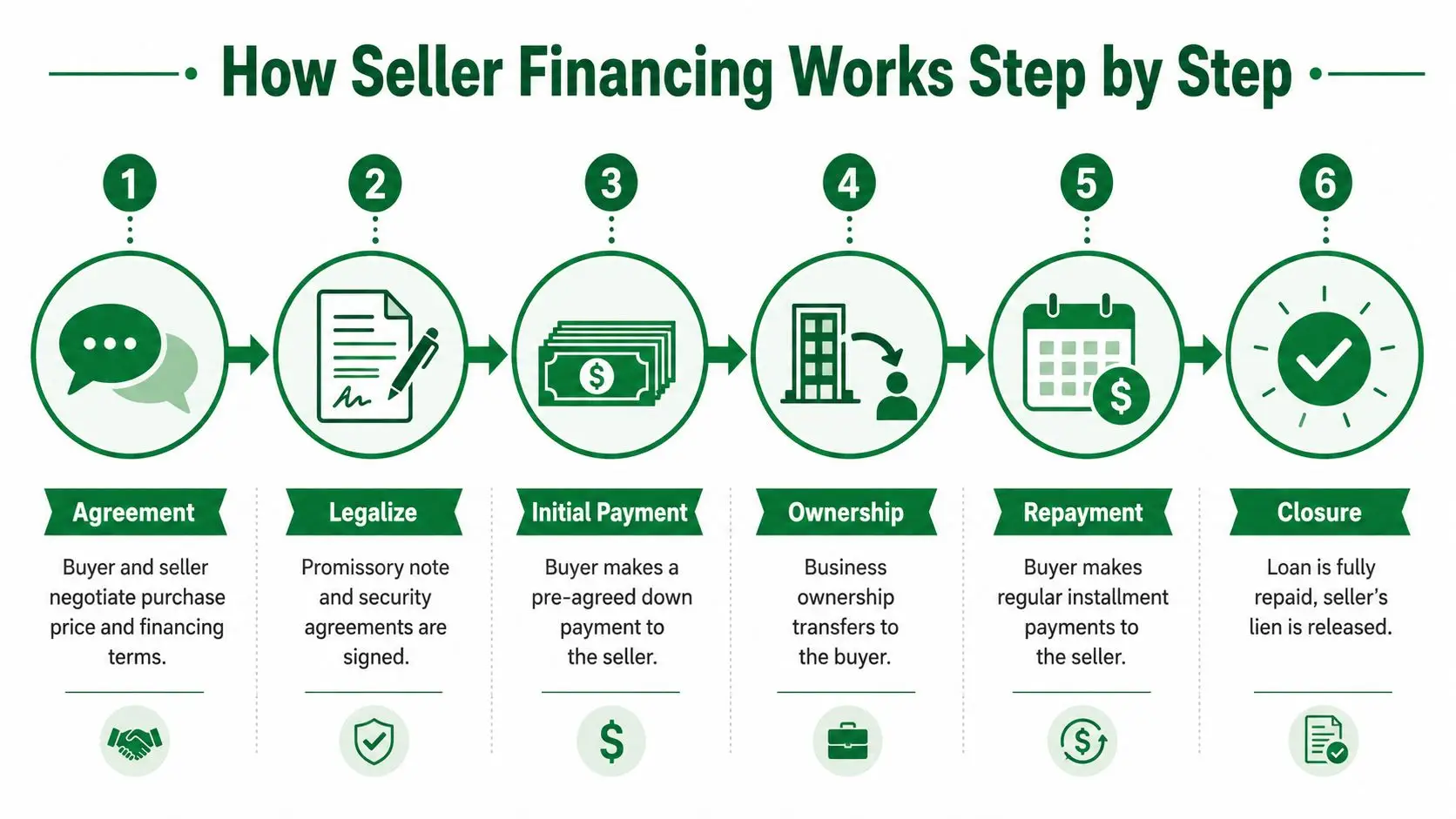
1. Agreement in principle
The buyer and seller first settle the purchase price, then decide how much of that price the seller is willing to carry. In a business sale, seller financing often covers a minority slice of the deal, which leaves room for a senior lender and reduces the buyer's cash need at closing. That mix matters in SBA-backed acquisitions because the note has to fit the broader financing structure, not sit apart from it.
2. Paper the note correctly
The financing has to be documented in a promissory note and the related security documents. In acquisition deals, the seller's paper is often written with a shorter payoff window and a rate that reflects the risk the seller is taking, because the note is meant to bridge the price gap rather than replace a bank loan. If you want a quick way to sense how the payment burden changes with different terms, you can estimate home seller financing, but business acquisition underwriting still turns on cash flow and lender approval standards.
3. Coordinate with senior debt
Once an SBA loan or other bank debt is in the stack, the seller note has to be drafted around the lender's rules. The lender will care about whether the seller note is subordinate, whether payments are on standby, and whether the buyer still meets the equity injection requirement. SBA seller paper is often used to help bridge the gap without breaking lender requirements, and the guidance on SBA seller notes is useful for seeing how those terms are typically handled from the lender side.
4. Make payments after closing
After closing, the buyer pays the seller according to the note terms until the balance is repaid. Some notes amortize over time, while others end with a balloon payment if that is what the parties negotiated. The practical risk is straightforward, if the business underperforms, the bank debt and the seller note still have to be serviced, so the buyer needs enough post-close cash flow to cover both.
Common Seller Financing Structures Explained
The phrase “seller financing” gets used broadly, but the actual instrument matters. A seller can carry a note, agree to an earnout, structure the purchase as an installment sale, or tie the deal to a wraparound mortgage in real estate settings. Those are different tools, and the wrong one can make a good deal harder to finance or harder to close.
| Structure Type | Primary Use Case | Typical % of Deal Value | Key Consideration |
|---|---|---|---|
| Seller Promissory Note | Deferred purchase price in an acquisition | Varies by deal, often a minority slice | Needs clear repayment and default terms |
| Earnout | Bridging a valuation gap tied to future performance | Usually tied to contingent value, not a fixed slice | Depends on post-close results |
| Installment Sale | Spreading seller proceeds over time | Deal-specific | Tax and cash-flow treatment matter |
| Wraparound Mortgage | Real-estate structure around existing debt | Deal-specific | Usually more relevant in property transfers than business buys |
Seller Promissory Note
This is the standard business-acquisition version. The buyer signs a promissory note for part of the price, and the seller acts as creditor until repayment. In practice, this is the cleanest fit when the seller wants a defined repayment schedule and the buyer needs a bridge between bank financing and total purchase price.
Earnout
An earnout is better when buyer and seller disagree on future performance. Instead of fixing every dollar at closing, part of the price depends on how the business performs after the sale. That can be useful when the seller is confident in the numbers but the buyer wants protection against overpaying.
Installment Sale
This structure stretches sale proceeds over time and often makes sense when the seller is comfortable taking payments rather than a lump sum. It can help the buyer close, but it can also create tax planning and cash-flow questions for the seller. That's why I'd always have the tax adviser look at it before anyone signs.
Wraparound Mortgage
A wraparound mortgage shows up more often in real-estate deals than operating-company acquisitions. The buyer makes payments on a new loan that “wraps” existing financing. It's a niche tool, useful in the right property deal, but usually not the first choice for a business purchase.
The right structure is the one the lender can underwrite, the seller can live with, and the lawyer can document cleanly.
If you're mixing seller paper with equity rollover concepts, the equity roll-over guidance helps show where seller financing ends and retained ownership begins.
Pros and Cons for Business Buyers and Sellers
Seller financing solves real problems, but it does not do so for free. In a business acquisition, the buyer usually gives up some flexibility later in exchange for a lower cash requirement at closing. The seller gets more buyer interest and the chance to improve deal economics, but also takes on credit risk and slower access to cash.
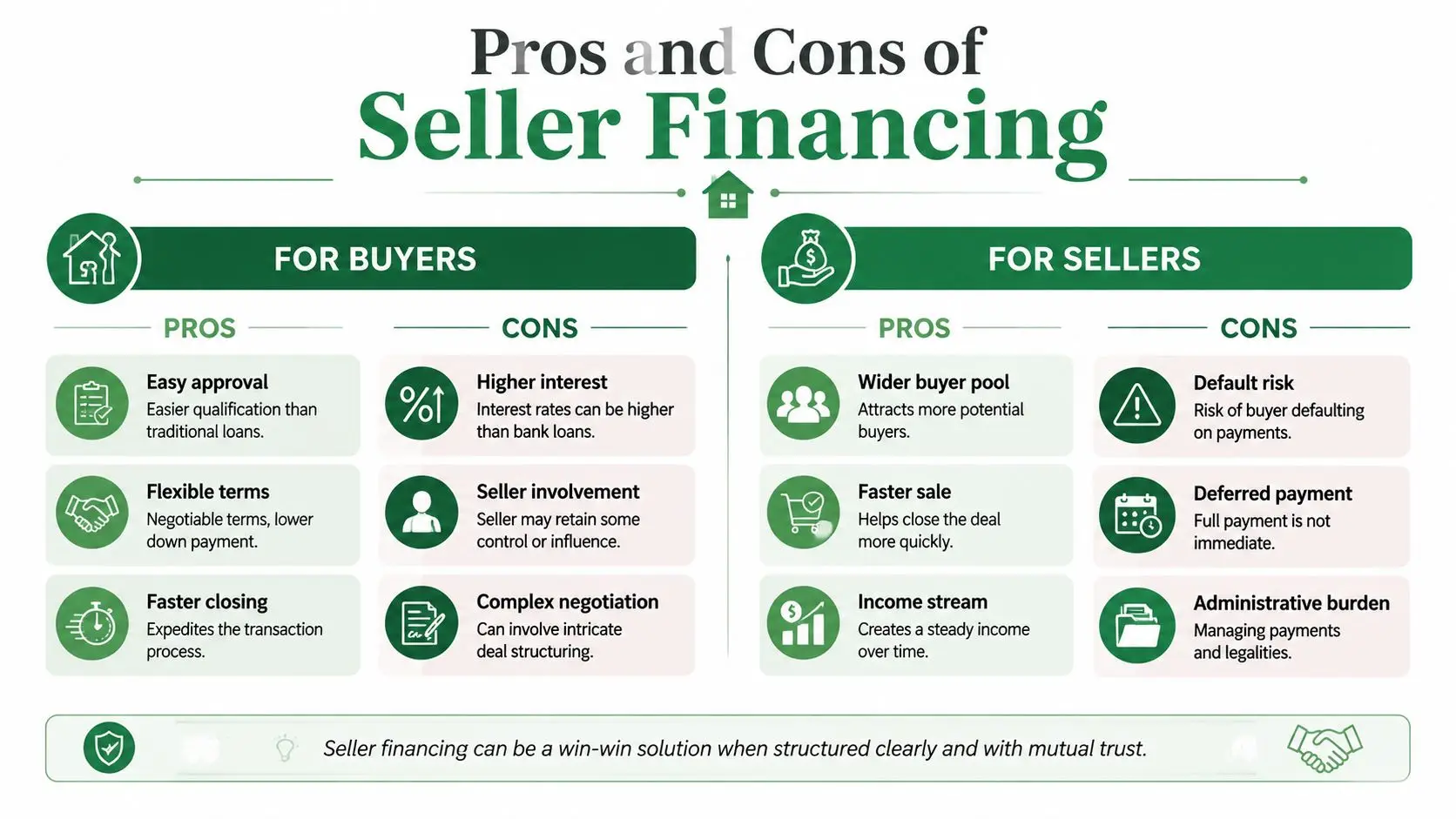
For the Buyer
Pros
- Lower cash at closing. Seller financing can reduce the upfront cash needed, which matters when an SBA loan still requires an equity injection and the buyer has to conserve working capital.
- Better odds of closing. When bank financing is tight, a seller note can help bridge the gap and keep the seller from walking away.
- Negotiable terms. The note can be shaped around the deal, instead of forcing the buyer into a one-size-fits-all bank structure.
Cons
- Higher total financing cost. Seller-financed notes are often shorter-term and priced above conventional debt, so the buyer may pay more over time.
- Balloon risk. If the note comes due before the business is stable, refinancing can become the next problem to solve.
- More complex negotiations. The buyer is not only buying the company, but also negotiating with the person selling it, and that can affect price, covenants, and repayment timing.
For SBA-backed acquisitions, the structure has to fit lender rules as well as the deal itself. If you want the practical framework lenders expect, see SBA seller financing rules for business acquisitions.
For the Seller
Pros
- Wider buyer pool. Seller financing brings in buyers who cannot fund the whole deal with cash.
- Recurring income. The seller receives installment payments instead of only one closing check.
- Better close probability. It can keep a deal alive when conventional financing slows down or stalls.
Cons
- Credit risk. The seller is no longer just a seller, they are also acting like a lender.
- Delayed liquidity. Cash arrives over time instead of all at once.
- Administrative burden. Someone has to track payments, enforce defaults, and manage paperwork.
For the seller, the trade-off is simple. More flexibility on the front end usually means more responsibility after closing.
In small-business M&A, seller financing is common because it helps bridge valuation gaps and lender shortfalls. One industry source says 80% of small business sales include some form of seller financing, with the typical seller note at 10% to 40% of deal value and default rates of 2% to 5% (Morgan & Westfield). That mix explains why buyers and sellers keep using it, it makes deals easier to close, but it also adds risk that both sides have to price into the transaction.
How Seller Financing Works with an SBA Loan
This area often poses difficulties for buyers. SBA lending doesn't automatically reject seller financing, but the seller note has to fit the lender's equity and standby rules. In other words, the bank wants to know whether the seller note behaves like real debt or behaves like part of the buyer's cash injection.

The most important concept is standby. A seller note on full standby means no payments are made until the SBA loan is repaid, while a partial standby usually means some limited payment is still allowed. Lenders care because a seller note that is subordinated and patient can help satisfy part of the buyer's equity requirement, while a note that needs current payments may not.
In SBA acquisition work, I look at whether the seller note is drafted to support the financing structure rather than fight it. The note has to line up with lender expectations, especially around repayment timing and subordination. If the seller wants current cash flow, the lender may see the note differently than if the note is fully patient and subordinated to the bank debt.
A buyer should also understand the cash effect. A seller note can reduce the amount of money needed from the buyer at closing, but that doesn't mean the buyer has solved the financing problem. It can shift part of the burden into a later repayment stream, which is why the debt service picture has to work on day one and after closing. If the note helps bridge equity and preserve working capital, it's useful. If it creates a squeeze later, it's just deferred pain.
For a deeper lender-side breakdown, the SBA seller financing rules guide is the right place to compare note structures against SBA expectations. That matters because a good acquisition is not just about getting the seller to say yes, it's about getting the lender to clear the file.
The Essential Legal Tax and Due Diligence Checklist
A seller note can break a deal fast if the paper is loose. In SBA acquisition work, I want the documents, tax treatment, and collateral package lined up before closing so the lender, seller, and buyer are all looking at the same risk.
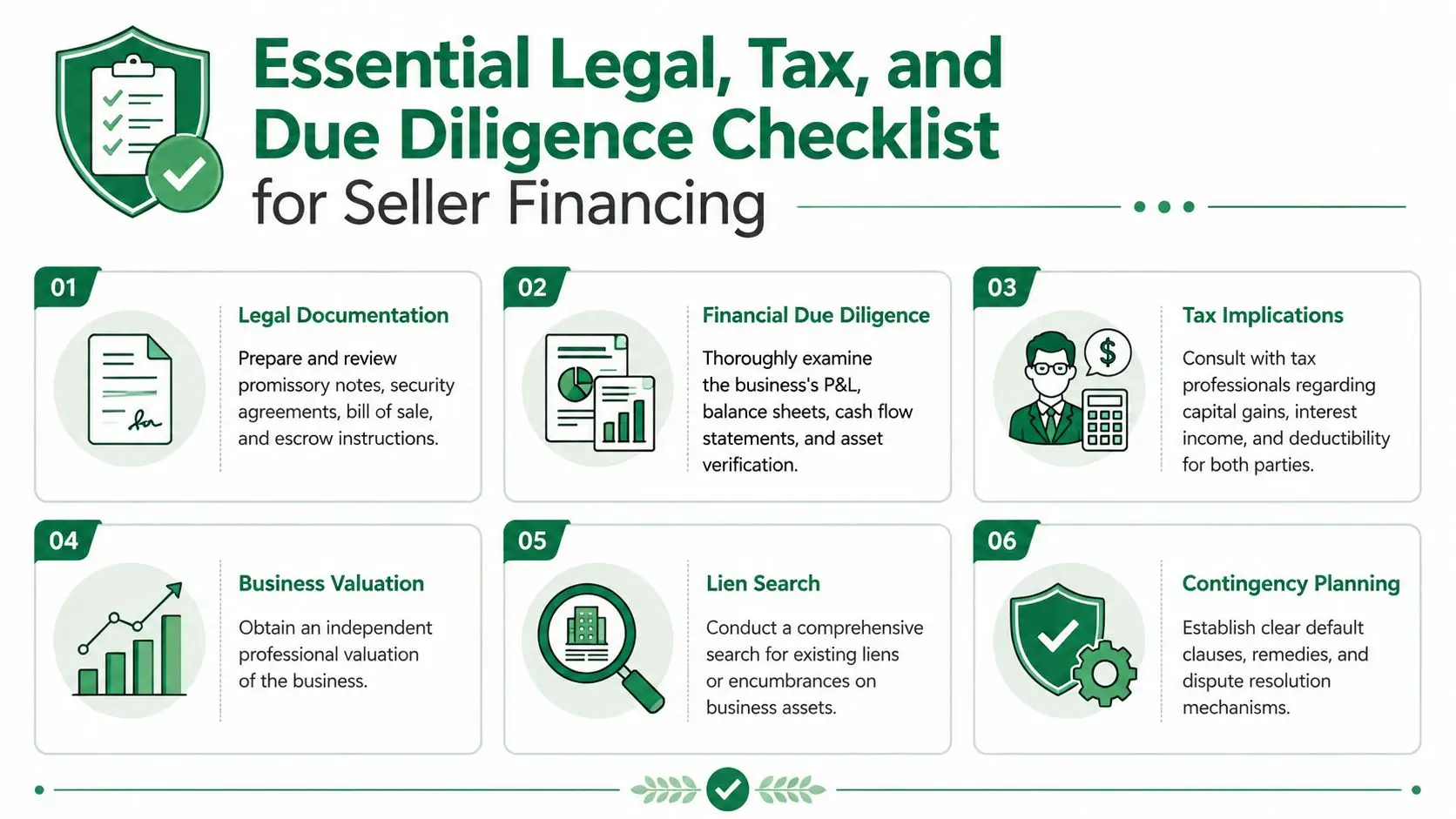
Legal documentation
- Promissory note. Spell out principal, interest, maturity, payment dates, default triggers, cure rights, and any balloon payment.
- Security agreement. Identify what collateral secures the note and what happens if the buyer defaults.
- Lien search. Confirm whether any existing liens already encumber the assets.
- Subordination language. If there's an SBA loan, the seller note may need to sit behind the bank's lien position.
The drafting has to fit the financing structure. If the seller note is meant to support SBA approval, the note, security agreement, and subordination terms should match the bank's required position instead of creating a conflict at closing. An AI contract drafting tool can help organize first-pass language for review, but it cannot replace a transaction lawyer who knows how lenders read these provisions.
Tax implications
- Installment-sale treatment. The seller should ask a tax adviser how deferred payments affect reporting.
- Interest income. The seller needs to know how the note's interest will be treated.
- Buyer deductibility. The buyer should confirm what portion of the payments is deductible interest and what portion is principal.
Tax treatment can change the economics of the deal. A seller may like the headline price, then find out the deferred structure pushes tax reporting into a pattern that does not match expected cash flow. On the buyer side, interest deductibility affects the after-tax cost of carrying the note, so the payment schedule and the tax analysis should be reviewed together, not in separate silos.
Buyer due diligence
- Seller stability. Make sure the seller can honor the promises made in the note and related documents.
- Business cash flow. The company has to support both senior debt and the seller note.
- Underlying collateral. Verify whether the note is secured by assets that still hold value after closing.
- Default remedies. Know what happens if the seller note or the business fails to perform.
A buyer also needs a real look at the operating business, not just the paperwork. That means checking the contracts, customer concentration, working capital needs, and any post-closing obligations that could strain repayment. A comprehensive due diligence checklist helps keep that review organized, especially when an SBA lender is also testing whether the deal can support senior debt and a seller note at the same time.
Seller financing can also trigger federal consumer-credit rules. The National Association of REALTORS® notes that Truth in Lending Act and ability-to-repay rules apply when a seller finances more than five transactions in a calendar year, and the CFPB's 2024 advisory made clear that TILA protections apply to many contracts for deed and other seller-financing arrangements (NAR). That threshold is easy to miss when people assume every private deal is automatically exempt.
If the drafting work feels scattered, an AI contract drafting tool can help organize first-pass language for review, but it doesn't replace counsel. I'd still have a transaction attorney and tax adviser review anything that involves seller paper, especially if the deal is tied to SBA financing.
Frequently Asked Questions About Seller Financing
What are typical interest rates and terms for a seller note?
In business acquisitions, seller notes often run with a maturity of 3–7 years and an interest rate in the 6%–10% range. I'd use that as a reference point, not a quote, because actual terms depend on deal risk, collateral, how much debt is already in the structure, and whether an SBA lender is also involved.
Can the seller foreclose or take back the business if I default?
Yes, if the note and the security documents give the seller those remedies. The collateral package, default language, and cure rights need to be set before closing, because the seller is taking lender-like risk and needs lender-like protections. If those terms are loose, the buyer and seller can end up fighting over control of the business right when cash flow is already under pressure.
Does a seller note require a personal guarantee?
Often, yes, though it depends on the deal structure and how hard each side is willing to negotiate. In SBA-backed acquisitions, the lender will usually have its own guaranty expectations, so the seller note cannot be drafted in a vacuum. The note, the guaranty, and the security agreement have to fit together cleanly, or the structure can create problems at underwriting and closing.
Is seller financing cheaper than a bank loan?
Usually not in the pure cost sense. It can be faster to close and easier to negotiate than some bank debt, but the tradeoff is often higher pricing, a shorter payoff period, and refinance risk later. For a buyer using SBA financing, seller paper can help bridge the gap in the capital stack, yet it still has to fit the lender's rules and the buyer's cash flow. If it is structured poorly, it may lower upfront cash outlay and create a harder repayment problem after closing.
If you're buying a business and trying to make the seller note work with SBA financing, GoSBA Loans can help structure the acquisition, review seller note terms, and coordinate the lender side so the file stays fundable. Visit GoSBA Loans if you want a practical financing review before you sign an LOI or finalize the purchase agreement.
