You're looking at an LOI while a buyer or seller on the other side is pushing for speed, a lender wants cleaner terms, and the clock on diligence hasn't even started yet. That's where most deals get sloppy. A letter of intent definition sounds simple on paper, but in an SBA acquisition it's the document that either keeps the deal moving or plants the first land mine.
A letter of intent (LOI) is a preliminary business transaction document that lays out the major deal points before the definitive contract is drafted. In plain English, it's the bridge between back-and-forth talk and the final purchase agreement. In practice, that bridge can still carry weight, because courts may enforce the clauses the parties made binding while treating the rest as an unenforceable agreement to agree if the drafting is loose (Investopedia, Iowa State Extension).
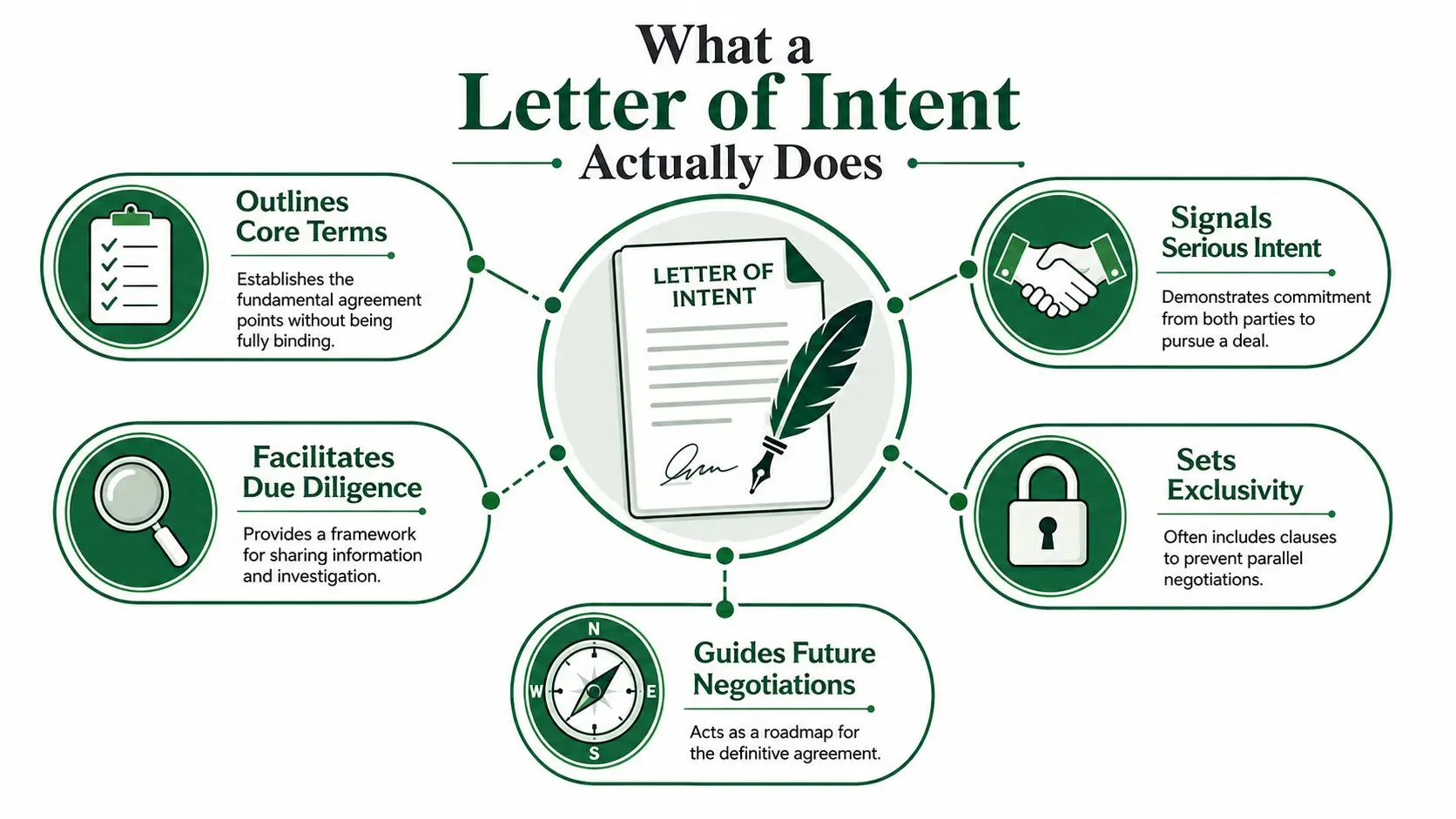
The part people miss is simple. Preliminary doesn't mean consequence-free. If you sign exclusivity, confidentiality, expense allocation, or governing law language without reading carefully, those provisions can still bind you even when the headline price and structure are still negotiable (DiliTrust, Michigan Bar Journal review).
Table of Contents
- The Core Functions of a Letter of Intent
- Key Clauses You Will See in Every LOI
- Which Clauses Can Still Bind You
- LOI vs the Definitive Purchase Agreement
- Sample LOI With Negotiation Commentary
- How the LOI Fits Into the SBA Loan Process
- Common Pitfalls and Best Practices Before You Sign
- What Comes After the LOI
The Core Functions of a Letter of Intent
A buyer sends an LOI when the deal is far enough along to justify real work, but not far enough for a full purchase agreement. That is the working letter of intent definition most deal teams rely on. It puts the first written frame around price, structure, timing, diligence, and confidentiality before either side commits to heavy legal drafting or outside diligence costs (Adobe, TechTarget).
The four jobs an LOI performs
First, it locks in the headline economics. That means the rough purchase price and deal structure the parties want to test, not the full set of warranties and indemnities that show up later.
Second, it opens the due diligence window. The buyer gets access, the seller gets focus, and both sides know where the open questions sit.
Third, it signals serious intent. A signed LOI tells the other side the buyer is prepared to spend time and money to see whether the deal closes.
Fourth, it creates a written record of what was informally agreed. That record matters when memories drift and the conversation gets retold a few different ways two weeks later.
Practical rule: treat the LOI as the first working draft of the deal, not a polite note of interest.
The part that trips people up is this. Some clauses are theater, others bite. A non-binding label on the page does not erase a binding exclusivity period or a cost-shifting clause if the drafting says those sections survive. SBA underwriters read the same document with a different lens, they care less about the label and more about whether the terms are clear enough to support loan packaging and whether any binding provisions create timing or cleanup issues before closing. Read the LOI clause by clause, not as one giant label that says “non-binding” and ends the analysis (DiliTrust).
Key Clauses You Will See in Every LOI
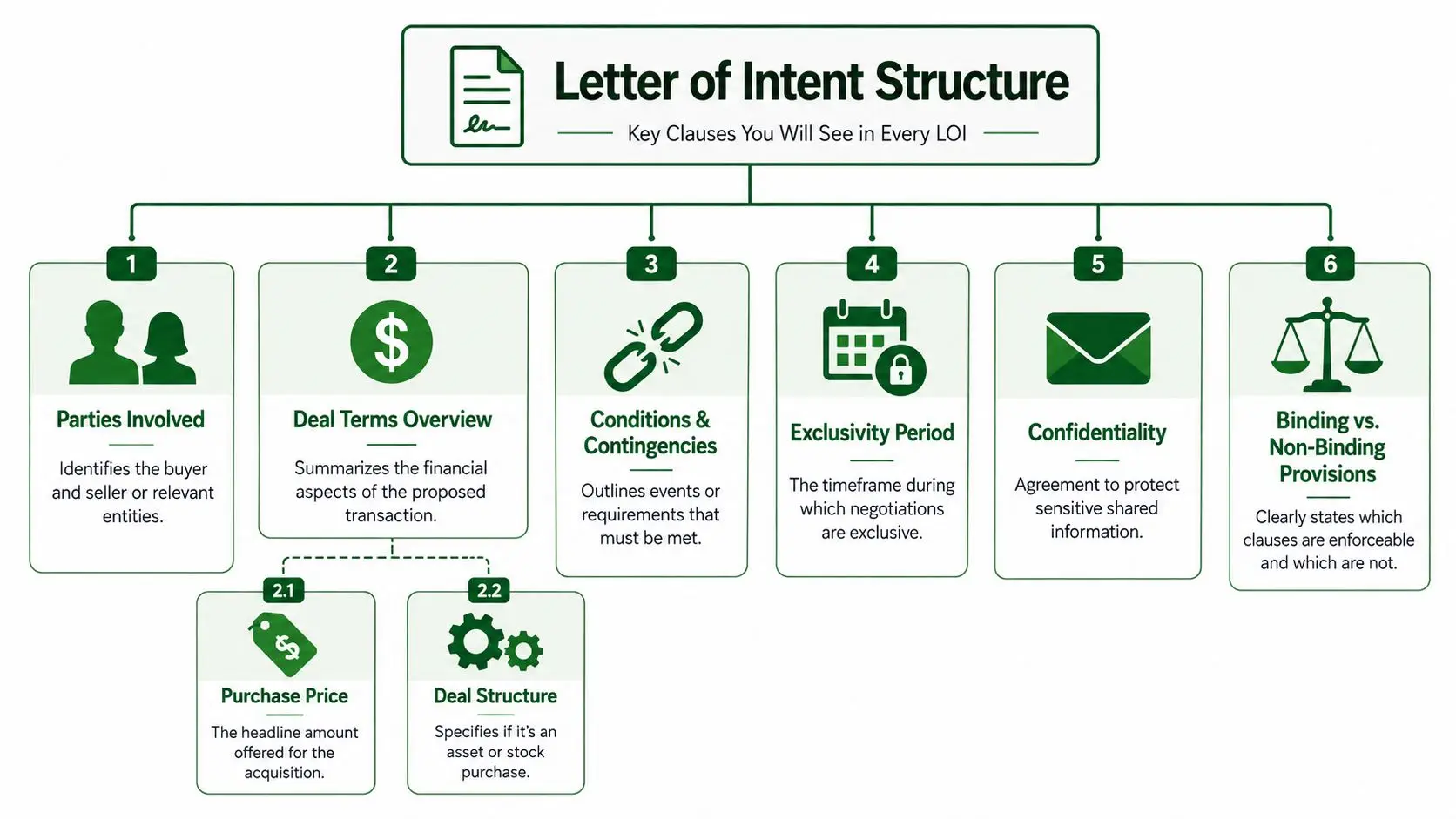
A workable LOI usually follows the same basic structure, even when the parties customize the details. The point is to identify the moving parts early so nobody confuses a headline term with a final obligation.
The opening block names the buyer, seller, and target company. That sounds obvious, but misidentifying the entity creates avoidable cleanup later, especially when the buyer is forming an acquisition vehicle.
The purchase price section gives the initial offer. That term is usually non-binding unless the document says otherwise, because the number is still subject to diligence and negotiation.
The deal structure section tells you whether it's an asset purchase, stock purchase, equity rollover, or seller note structure. That block is often still non-binding, but it drives lender review and tax analysis.
A deposit or earnest-money clause may show up to signal seriousness. Depending on drafting, it may be refundable, non-refundable, or conditional on closing milestones.
The due diligence language defines scope and timing. It usually sets expectations more than legal rights, but the timeline still matters because it governs how long the seller keeps the business in limbo.
The exclusivity or no-shop clause is often one of the most important binding provisions. It limits parallel negotiations while the buyer spends on diligence.
The confidentiality clause protects information shared during the process. In many LOIs, that one is expressly binding.
The termination rights, governing law, and binding-provisions paragraph round out the document. Those sections often decide whether a court treats the LOI as a roadmap or as a partial contract with real consequences.
For a closer look at seller financing mechanics that often sit beside these terms, see this guide on seller notes in SBA business acquisitions.
Which Clauses Can Still Bind You
The first trap is easy to miss. A buyer and seller read “non-binding” at the top of an LOI and assume the whole page is soft. Courts do not read it that way, and SBA lenders do not either.
The clauses that usually stay non-binding
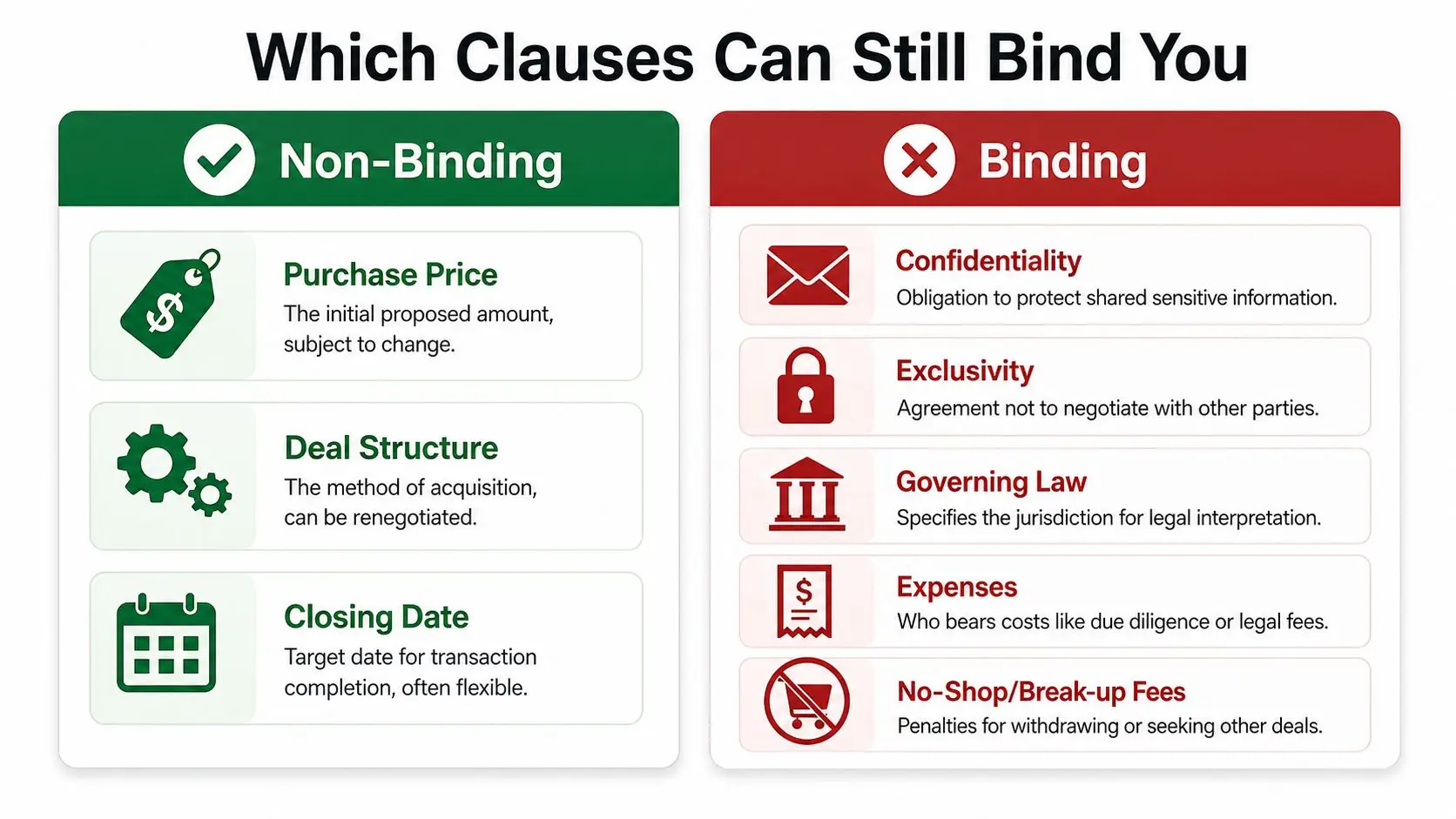
The purchase price usually stays preliminary. The deal structure often does too, unless the parties tie it to funding or tax treatment in a way that leaves little room to move. A target closing date is also commonly flexible, because diligence and lender review can push the timeline.
That is the headline, but it is not the whole page. In SBA acquisitions, underwriters care less about the label and more about whether a clause changes the path to closing or creates a real obligation before the purchase agreement is signed.
The clauses that commonly bind
Confidentiality, exclusivity, governing law, and expense allocation are the clauses that most often survive the non-binding label. Many LOIs also make dispute resolution binding, and some include no-shop language or break-up fee mechanics that become very real if someone walks. The same is true for side terms that look routine on paper but govern conduct while the deal is still in motion.
A useful outside reference on plain-language contract terms is Pipecorn's page on legal terms and conditions, especially if you are comparing how deal documents use binding language versus boilerplate.
A buyer once signed an LOI with a 30-day exclusivity period, then assumed the seller would keep shopping quietly because the price paragraph said “non-binding.” The exclusivity clause did not care what the price paragraph said. The seller was locked in.
A seller I have seen in practice accepted broad expense language, then learned the buyer intended to push diligence costs back through the LOI. That does not show up as a headline issue, but it can still move real money.
The clauses that bite in SBA deals are the ones that control conduct before closing, not the ones that restate the headline economics. If the LOI includes expense shifting, exclusivity, confidentiality, dispute resolution, or survival language, treat it like a live contract term and mark it up with the same care you would give to the purchase agreement. For a useful internal cross-check on capital stack terminology, see pari passu in SBA lending.
LOI vs the Definitive Purchase Agreement
A signed LOI can feel like the finish line. It is not. In SBA deals, it is usually the point where the work starts.
The LOI and the definitive purchase agreement do different jobs, and confusion between the two creates a lot of the friction I see in acquisition files. The LOI is a roadmap. The purchase agreement is the binding contract that transfers the business and allocates risk in detail. The LOI comes first, usually before diligence is complete. The purchase agreement comes later, after the buyer has enough information to lock in reps, warranties, indemnities, and closing mechanics.
| Dimension | Letter of Intent | Definitive Purchase Agreement |
|---|---|---|
| Purpose | Sets the deal direction and major terms | Finalizes the full legal sale |
| Timing | Before or during early diligence | After diligence and drafting |
| Detail level | Headline terms, contingencies, timelines | Detailed reps, warranties, indemnification, and closing conditions |
| Enforceability | Mixed, some clauses may bind | Generally intended to be fully binding |
| Exit mechanics | Termination or expiration language | Closing conditions, breaches, and remedies |
The practical difference is cost. The LOI lets both sides test the deal without spending heavily on full legal drafting. The purchase agreement is where the expensive issues show up, because it converts broad business intent into legal risk allocation.
That gap matters in SBA acquisitions. A lender may be willing to work from the LOI as a deal map, but the underwriter still wants the final documents to match the structure being financed. If the LOI says one thing about purchase price, equity injection, or seller note treatment, and the purchase agreement says another, the file slows down fast.
Most post-signing disputes do not come from the LOI's opening paragraph. They come from what the parties thought the LOI meant once diligence, legal drafting, and lender review forced the fine print into the open.
Bottom line: the LOI buys optionality. The purchase agreement spends it.
If you are also working through financing, the SBA lender will read the LOI as a deal map, not a finished contract. The final purchase agreement has to line up cleanly with the LOI on the terms that matter to underwriting, especially purchase price, equity injection, and seller note treatment.
Sample LOI With Negotiation Commentary
A good LOI reads like a disciplined outline, not a glossy promise. The buyer, seller, and target company should be identified right away, then the purchase price, structure, and deposit language should follow in plain terms. If the deal is being financed, the equity injection and seller note should be described in a way the lender can underwrite.
One clean way to handle the document flow is to draft the LOI in blocks, then annotate each block before anyone signs. A paralegal or deal coordinator can handle the first pass, and if you need a process reference for that workflow, it's useful to delegate legal document tasks to paralegals while counsel reviews the final risk points.
Sample block and what gets redlined
Opening identification. Buyer acquires Seller's business, subject to diligence and final documentation.
A careful buyer checks the exact legal entity name, not just the brand name on the building.
Purchase price and structure. The buyer proposes a purchase price, notes whether the transaction is asset or stock, and identifies any deposit. Sellers often push back if the price feels too soft or the deposit is too easy to keep.
Due diligence window. The buyer gets a defined period to review financials, contracts, and operational records.
Shorter is usually better for the seller, but only if the buyer can realistically finish underwriting.
Exclusivity. The seller agrees not to negotiate with other parties during the stated period.
This is the clause most buyers want tightened in their favor, and sellers should insist on a real end date.
Binding provisions. Confidentiality, exclusivity, governing law, and cost allocation are listed as binding.
This paragraph should be explicit. If it's buried or vague, it can create an enforcement problem later.
Termination. Either party can walk away if diligence fails, financing can't be obtained, or the deadline expires.
A clean termination clause keeps the deal from lingering in a dead zone.
The seller should also press for a clear no oral modification sentence so nobody tries to rewrite the LOI with hallway promises after signing. That's not drama, it's housekeeping. In acquisition work, the smallest ambiguity tends to become the loudest argument.
How the LOI Fits Into the SBA Loan Process
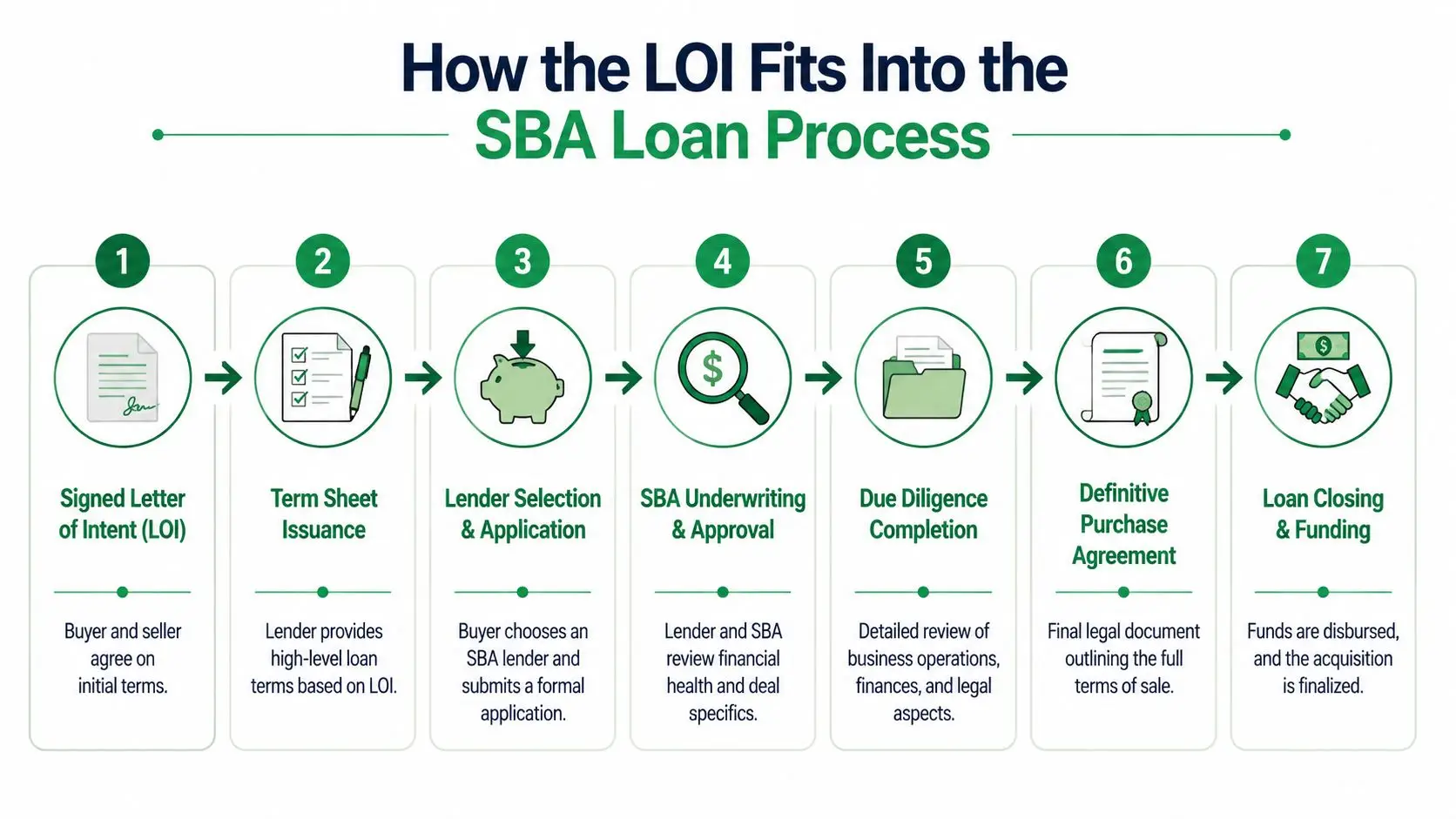
The SBA side of the file starts much earlier than many buyers expect, and the LOI is where the lender first sees the deal shape. A typical path runs from signed LOI to term sheet issuance, then lender selection and application, SBA underwriting and approval, due diligence completion, definitive purchase agreement, and finally loan closing and funding (GoSBA Loans acquisition timeline).
What underwriters pull from the LOI
Underwriters focus on the deal terms that affect repayment and closing feasibility. That usually includes the purchase price, source and use of funds, equity injection, seller note terms, and the target closing date. If those items conflict with the later application, the lender will send them back.
The SBA rule that matters most here is the July 2025 requirement that at least 5% of the equity injection come from the buyer or their investors. That needs to be visible in the LOI's economics, not implied, because the lender will read the deal stack directly from that paper trail.
What to confirm before you send the LOI to a lender
- Purchase price: Make sure the headline number matches the story you want the lender to underwrite.
- Equity source: Spell out the buyer or investor cash clearly enough to satisfy the 5% requirement.
- Seller note: State whether it's part of the purchase price, standby, or another negotiated feature.
- Closing timeline: Use a realistic date that fits diligence and underwriting.
- Binding terms: Keep the legal obligations separate from the economic terms so the file doesn't get muddy.
GoSBA Loans publishes an SBA acquisition process guide that starts with the LOI and then moves into lender matching and closing support. That's the right sequence if you want the loan file to stay aligned with the acquisition file from day one.
Common Pitfalls and Best Practices Before You Sign
The fastest way to create pain is to sign an LOI like it's a formality. It isn't. It's the first place where the deal can get boxed in, drift, or become expensive to unwind.
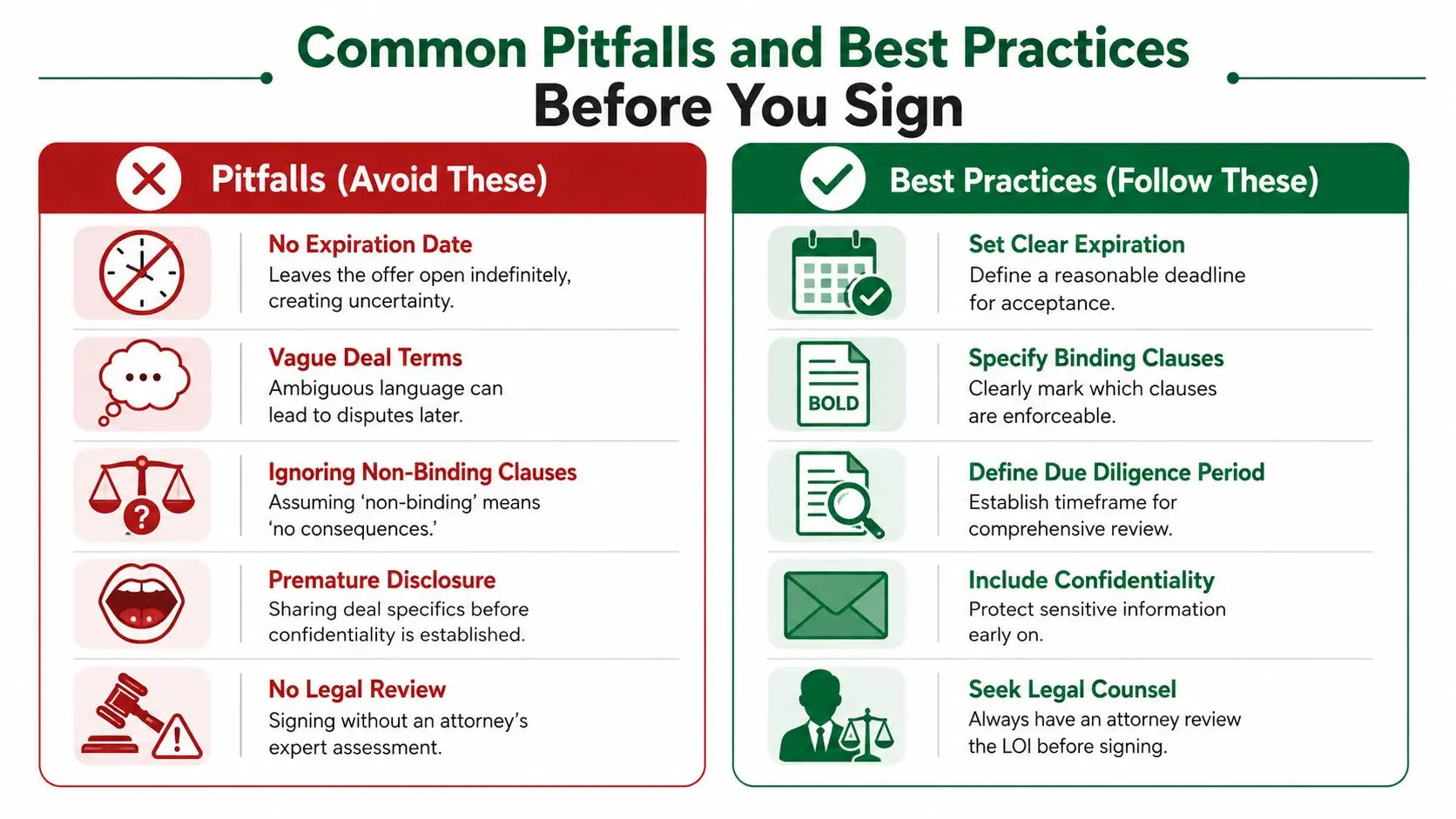
Mistakes that keep showing up
No expiration date leaves the offer floating indefinitely. Vague deal terms invite later arguments. Ignoring non-binding clauses is how buyers get surprised by exclusivity or expense obligations.
Premature disclosure is a bad habit when confidentiality isn't locked down. No legal review is still the most expensive shortcut in the room. If you're screening a counterparty as well, a quick pass on how to avoid company scams can help you sanity-check who you're really dealing with.
What to lock in before signing
- Clear expiration: Put a real deadline on acceptance.
- Specific binding clauses: Name the enforceable sections outright.
- Due diligence period: Define the window so it doesn't sprawl.
- Confidentiality language: Protect information before the data room opens.
- SBA-compliant equity language: Match the deal terms to the lender's requirements.
A good LOI isn't the one with the most language. It's the one that keeps the negotiations moving without accidentally creating obligations you didn't mean to take on. For a practical diligence companion, use this SBA acquisition due diligence checklist before you sign anything.
What Comes After the LOI
Once the LOI is signed, work starts. The buyer opens the due diligence window, requests seller financials, orders third-party valuation and appraisal work, selects an SBA lender, and begins drafting the definitive purchase agreement. A clean LOI keeps those tracks aligned instead of fighting each other.
For a full walk from term sheet to funding, follow the acquisition timeline in from LOI to closing. The LOI is a bridge, not a destination, and the cleaner it is, the faster the closing path usually gets.
If you're buying a business with SBA financing, GoSBA Loans helps coordinate the loan side so your LOI, lender package, and closing documents stay aligned from the start. If you want a second set of eyes on purchase price, seller note structure, and the clauses that bind, visit GoSBA Loans and start the conversation before you sign.
